Tattoos For Men

Table of Content
Table of Contents
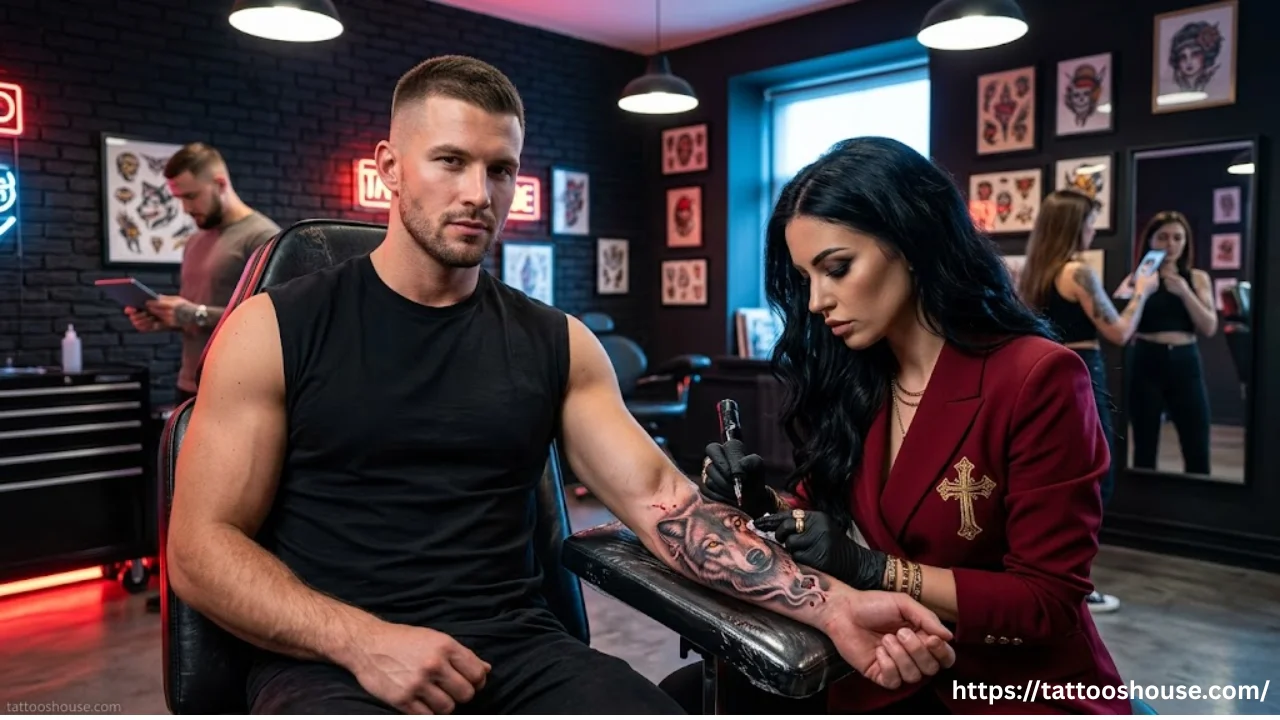
1. Introduction: What Are Tattoos for Men?
A tattoo for men is a permanent form of body modification created by inserting pigment into the dermis layer of the skin using needles. The word “tattoo” derives from the Tahitian word “tatau,” meaning “to mark something.”
Today, tattoos for men are more popular than ever. According to polling data, approximately 20-30% of Americans have at least one tattoo, with men representing a significant portion of that demographic. In 2007, only 14% of Americans had tattoos; by 2014, that number had risen to 20%, and by 2026, estimates suggest over 35% of men under 40 have at least one tattoo.
But tattoos are not merely decorative. Throughout history and across cultures, tattoos for men have served as:
- Rites of passage marking transition to adulthood
- Spiritual protection against evil forces
- Group identification signaling tribe, clan, or brotherhood
- Achievement markers commemorating accomplishments
- Memorials honoring lost loved ones
- Personal transformation symbols of overcoming adversity
At Tattoos House, we’ve curated thousands of tattoo ideas for men across every possible style, placement, and meaning. This comprehensive guide brings together everything we know — from ancient history to modern trends — to help you make informed decisions about your ink.
Tattooshouse.com is For Sale 🚀
Premium domain available for serious buyers. Perfect for tattoo business, blog, or brand.
Asking Price: $3000
💬 Contact on WhatsApp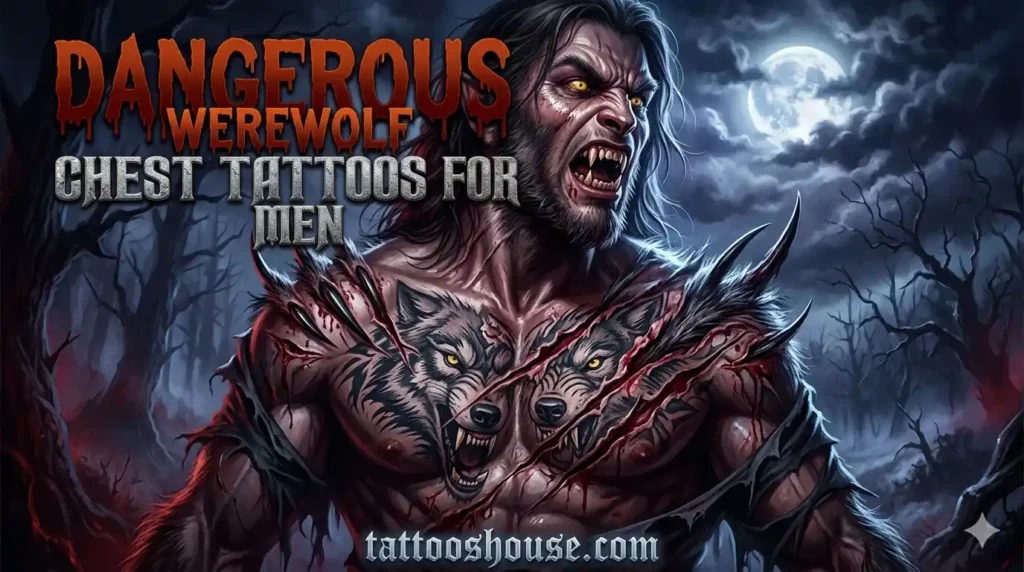
2. The 5,000+ Year History of Tattoos for Men
Ancient Origins (3300 BCE)
The oldest known tattoos for men were discovered on Ötzi the Iceman, a mummy found frozen in the Ötztal Alps between Austria and Italy. Ötzi lived around 3300 BCE and had 61 tattoos on his body — groups of dots and lines placed on his joints and spine. Archaeologists believe these tattoos were therapeutic, applied to relieve joint pain, rather than decorative.
Egyptian Tattoos (2000 BCE)
Ancient Egyptian mummies dating to 2000 BCE show evidence of tattooing, primarily on female bodies. However, male mummies from the same period also display tattoos — geometric patterns and symbols associated with fertility, protection, and religious devotion.
Polynesia & Samoa: The Birthplace of “Tattoo”
The word “tattoo” entered the English language through Captain James Cook’s voyages to Polynesia in the 1700s. In Samoa, traditional tattoo for men called “Pe’a” cover the body from waist to knees. Receiving a Pe’a is a sacred, painful ritual that signifies courage, social status, and coming of age. The process can take weeks and is performed using traditional bone tools.
Japanese Irezumi: The Art of the Warrior
Japanese tattoos for men, known as Irezumi, developed over centuries into one of the world’s most sophisticated tattoo traditions. Initially associated with spirituality and protection, Japanese tattoos later became linked to the Yakuza (Japanese organized crime) who used elaborate full-body suits to demonstrate their ability to endure pain and their permanent commitment to their clans.
In 19th-century Japan, tattoos were banned as authorities sought to modernize and appear civilized to Western nations. This pushed the art form underground, where it flourished among the working class and eventually became a symbol of rebellion. The ban was lifted after World War II.
Key Japanese motifs include:
- Dragons (wisdom, strength, protection)
- Koi fish (perseverance, overcoming adversity)
- Hannya masks (jealousy, wisdom, protection)
- Cherry blossoms (fleeting nature of life)
- Samurai (honor, loyalty, Bushido code)
Today, Japanese tattoos for men remain one of the most respected and sought-after styles worldwide. Link to Japanese Forearm Article
Western World: From Sailors to Mainstream
In the Western world, tattoo for men were popularized by sailors who encountered tattooing during Pacific voyages. By the late 1800s, tattoos were associated with maritime culture, circus performers (“tattooed ladies”), and the working class.
The Tattoo Renaissance (1960s-Present):
The 1960s marked a turning point for tattoo for men. Artists like Sailor Jerry (Norman Collins), Don Ed Hardy, and Lyle Tuttle elevated tattooing from counterculture activity to respected art form.
Key milestones:
- 1961: New York City bans tattooing (remains illegal until 1997)
- 1970s: Punk subculture embraces tattoos as rebellion
- 1990s: “Miami Ink” and “LA Ink” bring tattooing to mainstream television
- 2001: After 9/11, firefighters and police use tattoos to memorialize fallen comrades
- 2014: 20% of Americans have tattoos (up from 14% in 2007)
- 2026: Over 35% of men under 40 have tattoos
3. Why Do Men Get Tattoos? The Psychology Behind Ink
Research Findings on Motivation
According to tattoo artists interviewed over decades, the reasons men seek tattoos for men fall into several categories:
| Motivation | Percentage (Estimated) | Description |
|---|---|---|
| Self-Expression | 35% | Artistic identity, personal narrative |
| Memorial/Tribute | 20% | Honoring loved ones who have passed |
| Overcoming Adversity | 15% | Survivor of illness, addiction, trauma |
| Group Belonging | 15% | Military, clubs, brotherhoods |
| Aesthetic Only | 10% | Purely decorative, no deeper meaning |
| Rebellion | 5% | Rejecting societal norms |
The Belonging Hypothesis
Research suggests that one of the most powerful motivations for tattoo for men is the desire for group belonging. This explains why matching tattoos are so popular among military units, sports teams, fraternities, and friend groups. The act of enduring pain together creates a bond that words cannot replicate.
Pain as Transformation
Tattoo artists consistently report that the pain of getting tattooed is part of the appeal. Pain becomes a rite of passage — proof that you’ve endured something difficult and emerged transformed. This is why many men describe their tattoos as “accomplishments” rather than just decorations.
4. 30+ Styles of Tattoos for Men (Complete Guide)
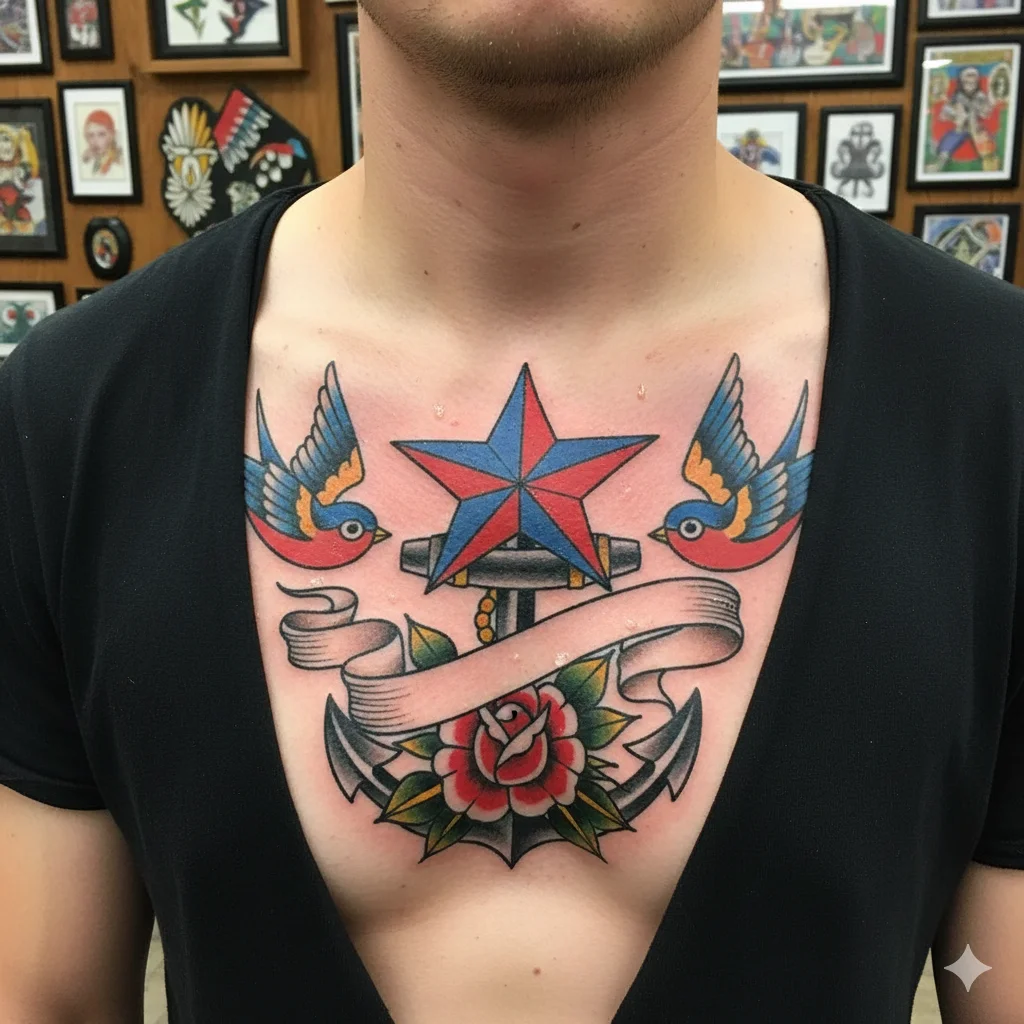
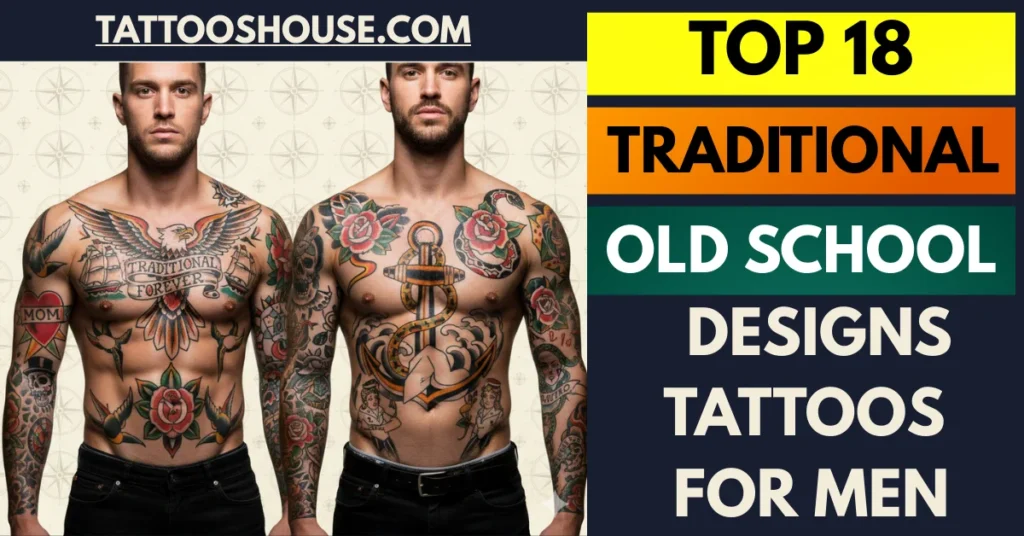
Traditional / Old School
- Characteristics: Bold black outlines, limited color palette (red, green, yellow, blue), minimal shading, iconic designs (anchors, eagles, roses, skulls, swallows)
- History: Originated with Sailor Jerry in the 1940s-60s among sailors and military personnel.
- Best for: Men who appreciate tattoo history and want designs that age beautifully (bold lines hold up better than fine lines).
- Cost: $150-300/hour
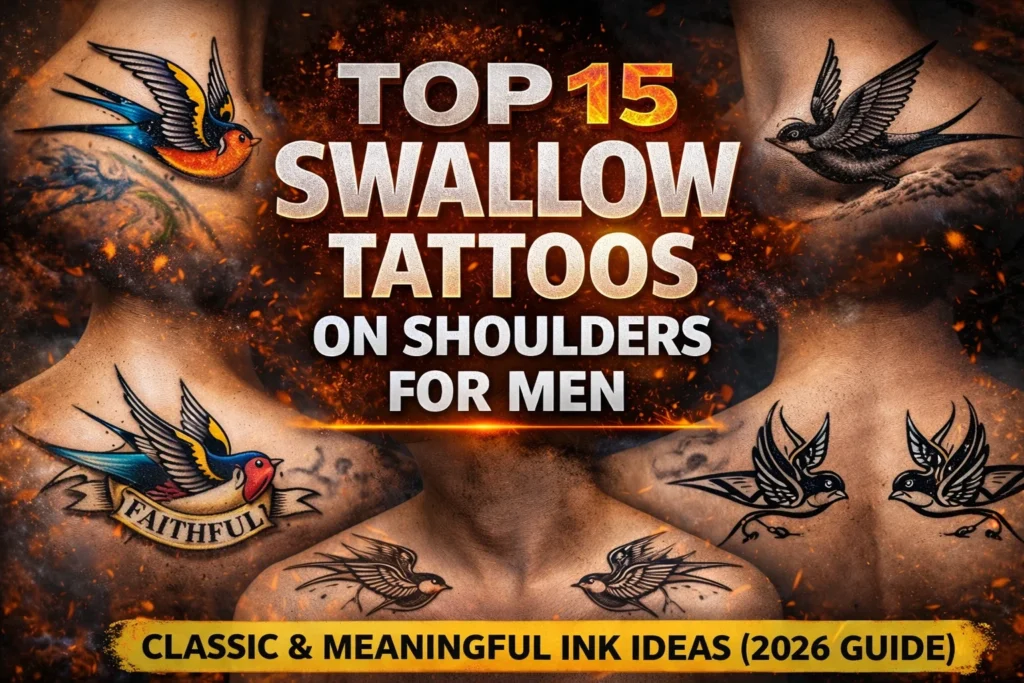
- See: Traditional Tattoos Old School, Swallow Shoulder Tattoos
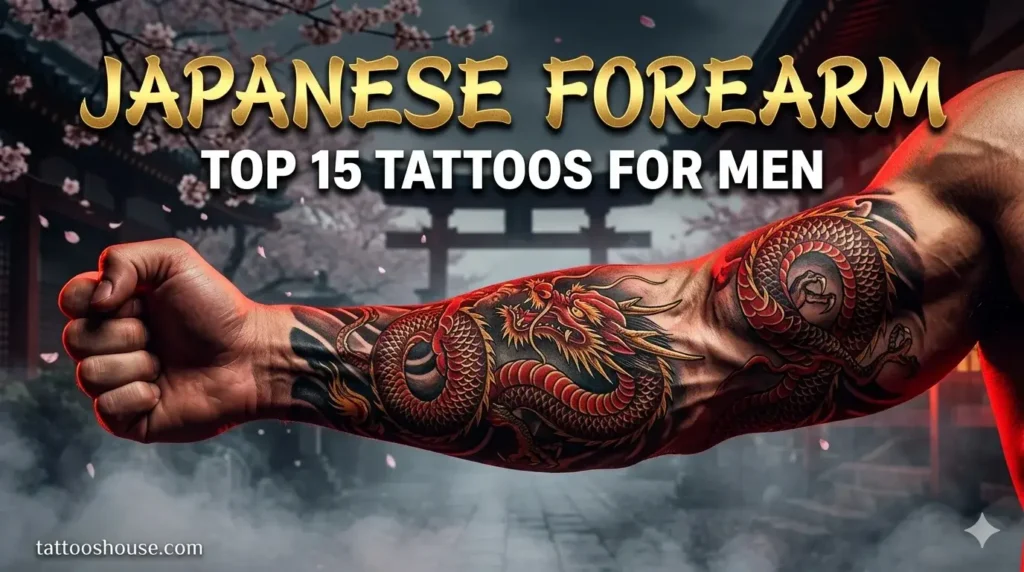
Japanese / Irezumi
- Characteristics: Bold outlines, vibrant colors, specific motifs (dragons, koi, cherry blossoms, Hannya masks, samurai), flowing backgrounds of waves, clouds, or wind bars.
- History: 1,000+ years old; originally spiritual, later associated with Yakuza; banned then reborn as fine art.
- Best for: Men who love Japanese culture and want large-scale, meaningful work.
- Pain level: Medium-High (large scale = more time)
- Cost: $200-500/hour
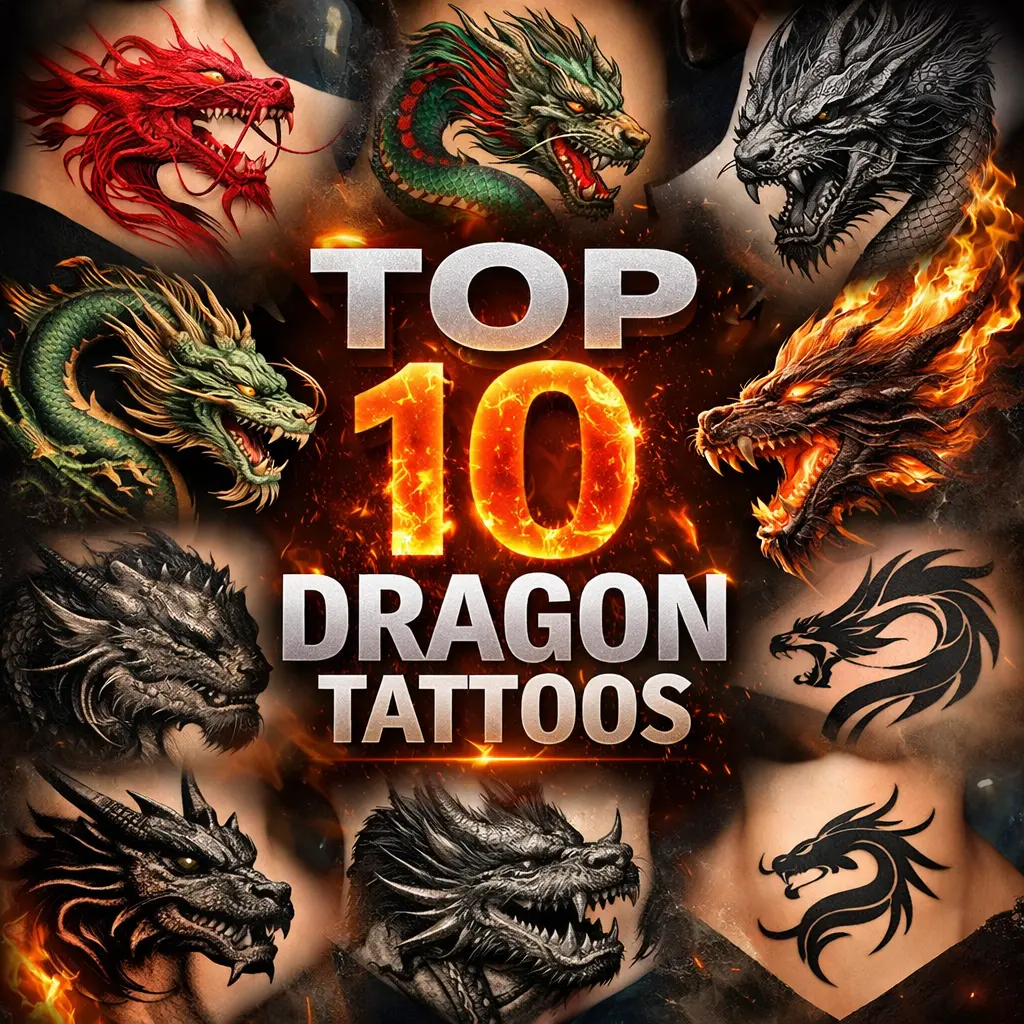
- See: Japanese Forearm Tattoos, Dragon Neck Tattoos
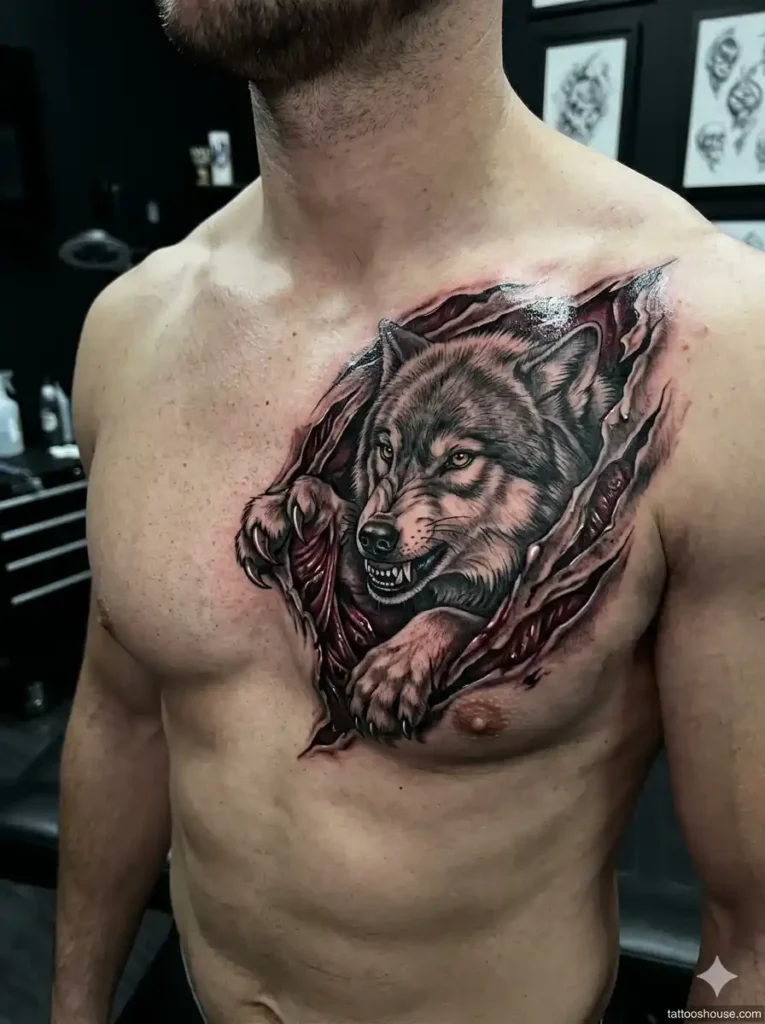
Realism / 3D / Hyper-Realistic
- Characteristics: Photographic accuracy, detailed shading, smooth gradients, lifelike portraits, 3D optical illusions.
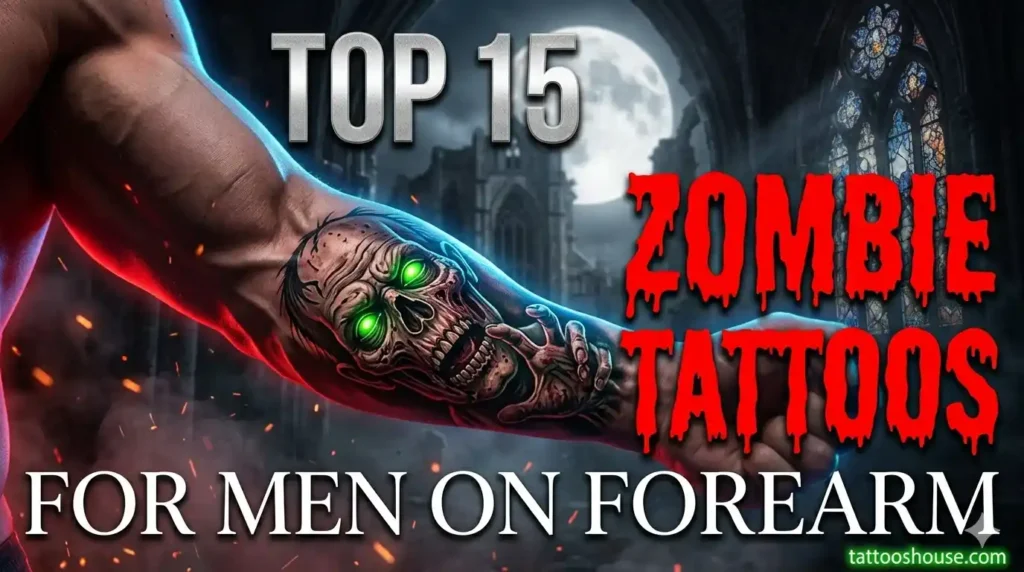
- Best for: Men who want portraits of loved ones, hyper-realistic animal faces (wolf, lion), or movie-style horror (zombies).
- Pain level: Medium-High (detailed shading requires time)
- Cost: $200-500/hour
- See: Dangerous Wolf Chest, Zombie Forearm
Neo-Traditional
- Characteristics: Evolution of traditional style; more detailed shading, wider color palette (including earth tones and pastels), illustrative quality, nature motifs.
- Best for: Men who want the boldness of traditional with more artistic refinement.
- Pain level: Medium
- Cost: $150-400/hour
Tribal
- Characteristics: Bold black patterns, flowing curves, sharp points, symmetrical designs. Originated from Polynesian, Maori, and Native American traditions.
- Best for: Men honoring their cultural heritage or seeking bold, abstract designs.
- Pain level: Medium (bold lines but usually less time than realism)
- Cost: $150-300/hour
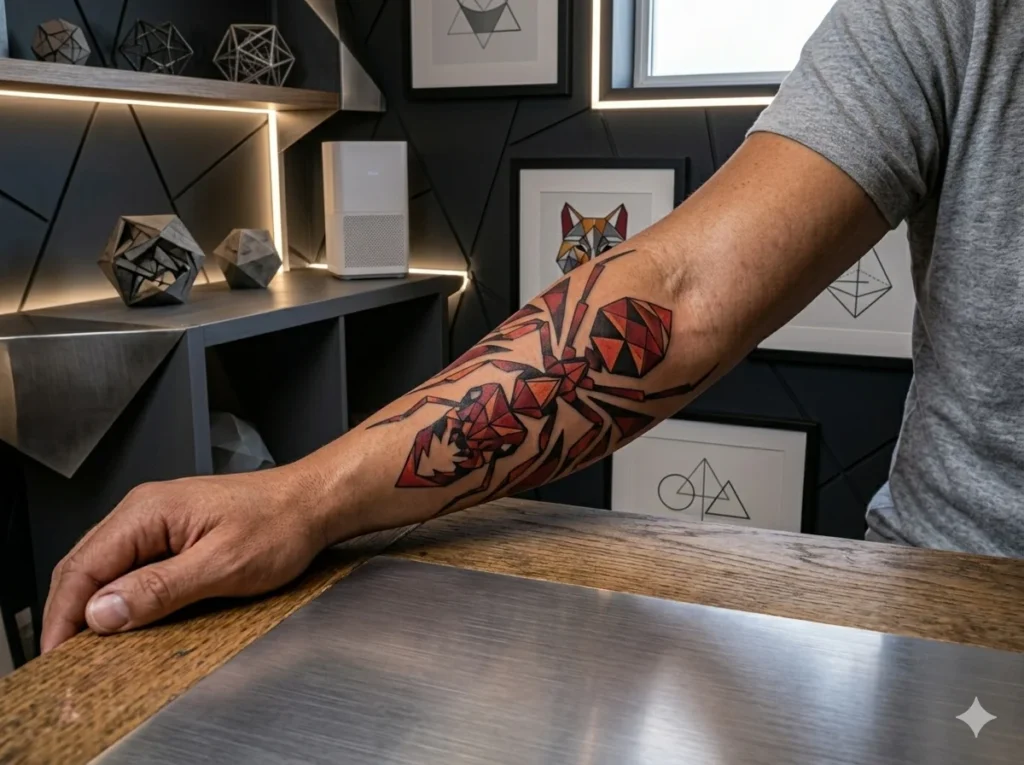
Geometric & Mandala
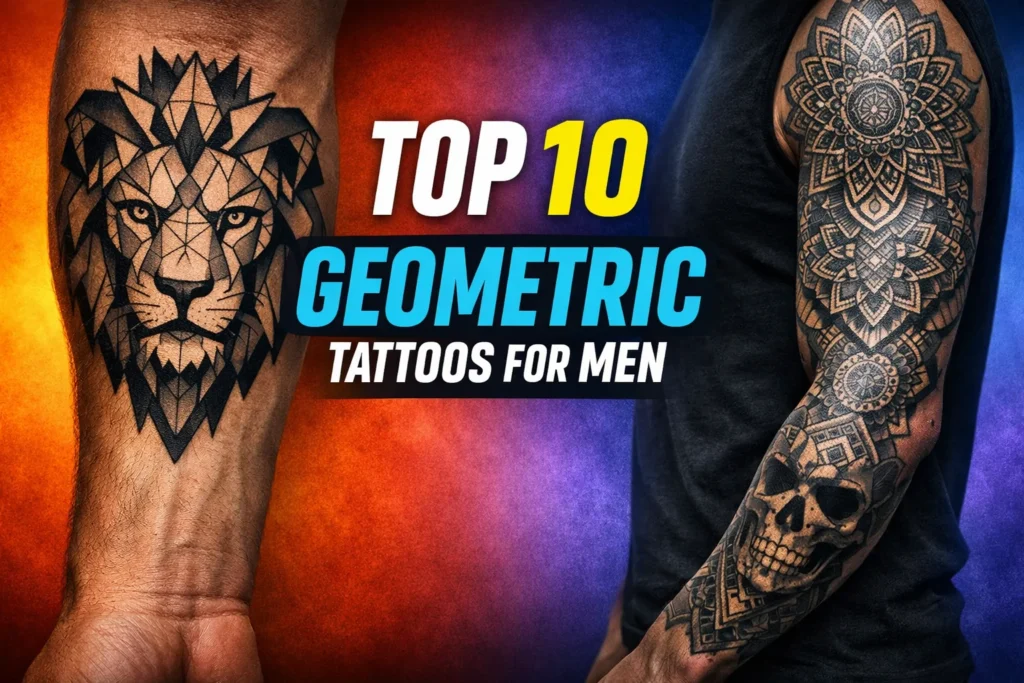
- Characteristics: Symmetrical shapes, clean lines, dot work, mathematical precision, sacred geometry patterns.
- Best for: Modern men who appreciate minimalism, symmetry, and precision.
- Pain level: Low-Medium (fine lines, less trauma to skin)
- Cost: $150-400/hour
- See: Geometric Tattoo Designs
Blackwork
- Characteristics: Only black ink, heavy solid black areas, negative space designs, high contrast, dramatic.
- Best for: Men who want bold, dramatic tattoos that command attention.
- Pain level: Medium-High (heavy black requires more needle passes)
- Cost: $150-350/hour
Watercolor
- Characteristics: Soft edges, color gradients mimicking watercolor paintings, no bold outlines, bleeding effect.
- Best for: Artistic men who want colorful, dreamy, unique designs.
- Note: Watercolor tattoos may fade faster and require more frequent touch-ups than traditional styles.
Biomechanical
- Characteristics: Imagery of mechanical parts (gears, wires, pistons) blended with flesh and skin to create illusion of robotic body modification.
- Best for: Sci-fi fans, engineers, men who love futuristic aesthetics.
- Pain level: Medium-High
- Cost: $200-500/hour
Trash Polka
- Characteristics: Chaotic mix of realistic and abstract elements; red and black dominate; newspaper-style text and images; asymmetrical.
- Best for: Men who want unique, edgy, unconventional designs.
- Pain level: Medium
- Cost: $200-450/hour
Minimalist / Fine Line
- Characteristics: Thin delicate lines, simple designs (geometric shapes, small symbols), lots of negative space, modern aesthetic.
- Best for: First-time tattoo recipients, men who prefer subtle ink.
- Pain level: Low (thin needles, less skin trauma)
- Cost: $50-200 (small pieces)
5. Tattoo Meanings: What Every Symbol Represents
Animal Symbols
| Symbol | Primary Meaning | Secondary Meanings | Examples |
|---|---|---|---|
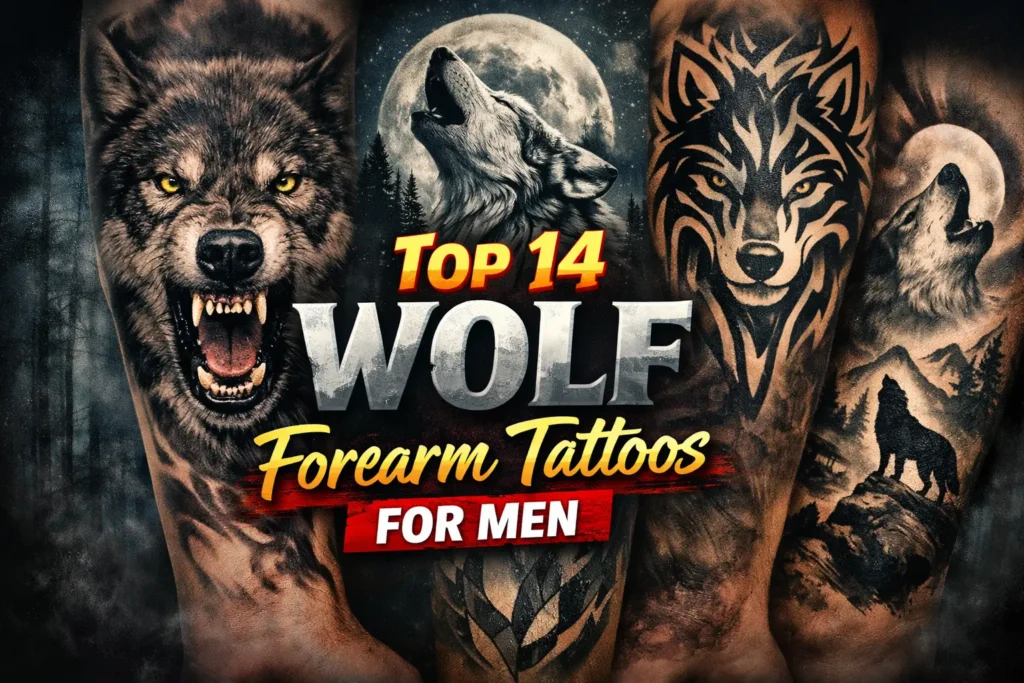
| Wolf | Loyalty, family, survival | Leadership, ferocity, freedom | Wolf Forearm, Dangerous Wolf Chest |
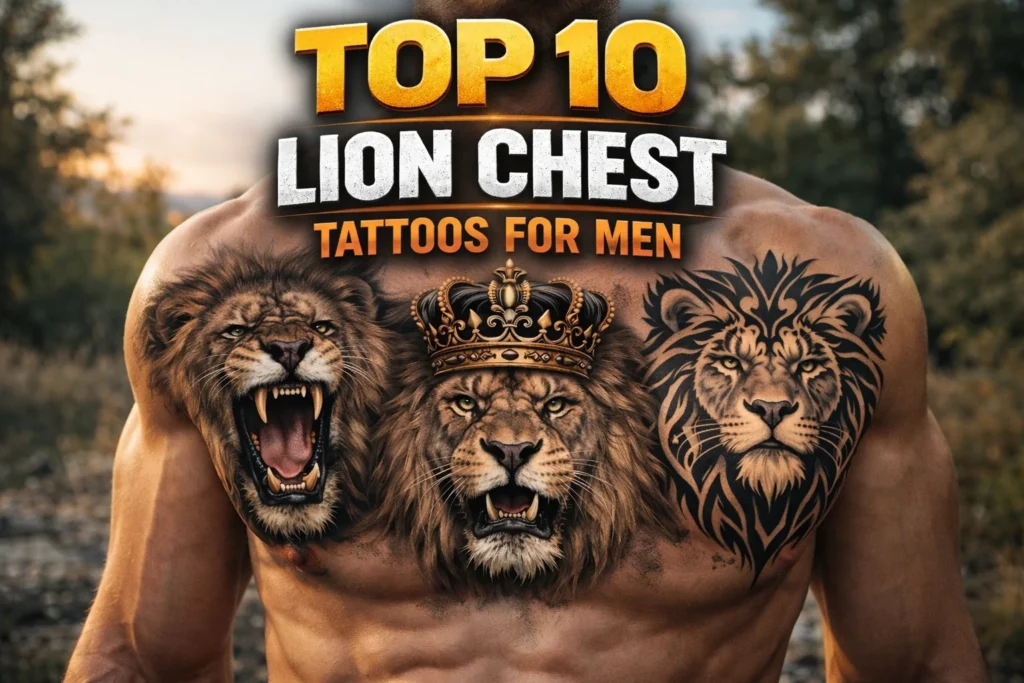
| Lion | Courage, royalty, strength | Leadership, pride, sun symbolism | Lion Chest |
| Dragon | Wisdom, strength, protection | Good luck (Eastern), danger (Western) | Dragon Neck |
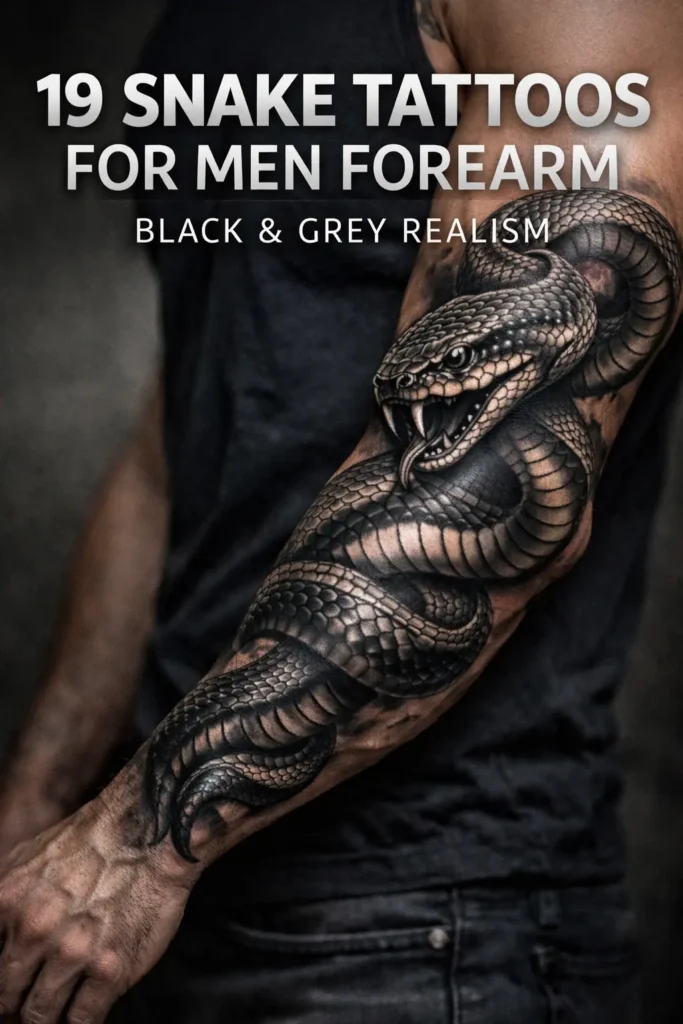
| Snake | Transformation, healing, rebirth | Danger, cunning, fertility | Snake Forearm |
| Eagle | Freedom, vision, power | Patriotism, spiritual connection | — |
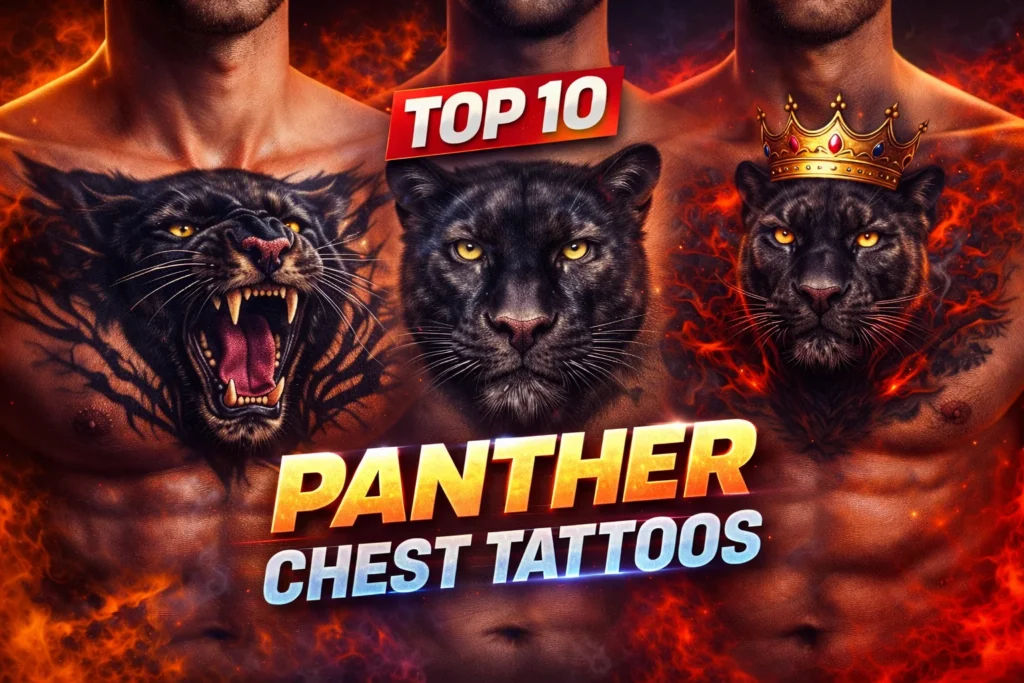
| Panther | Power, agility, mystery | Protection, stealth | Panther Tattoos |
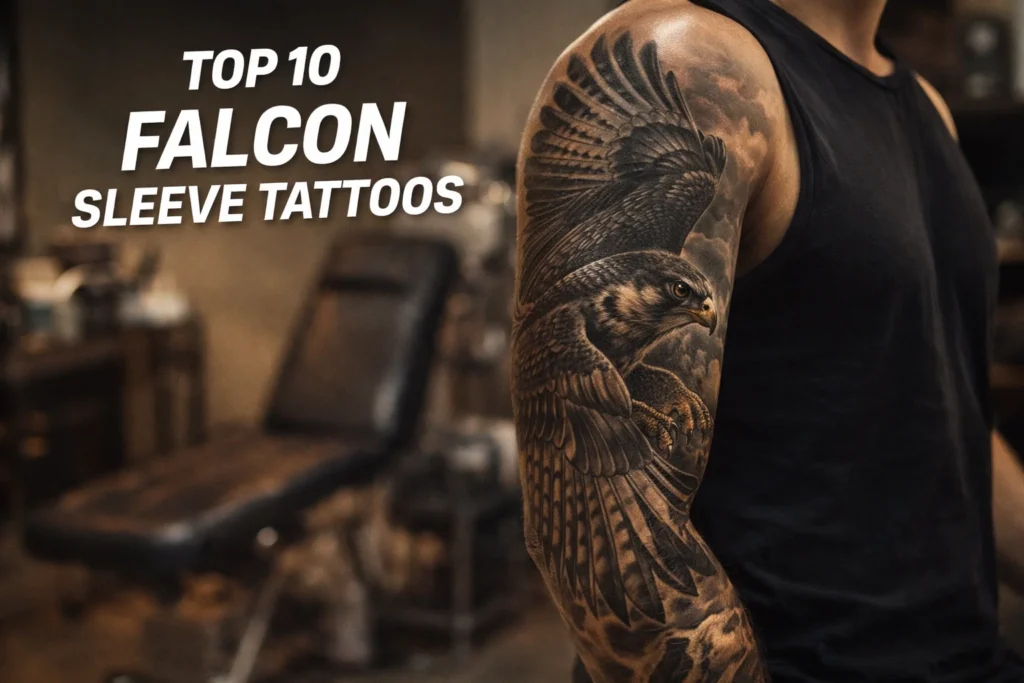
| Falcon | Vision, freedom, speed | Nobility, hunting prowess | Falcon Sleeve |
| Swallow | Loyalty, safe return, hope | Sailing tradition, freedom | Swallow Shoulder |
| Crane | Longevity, good fortune | Peace, fidelity | Japanese Forearm |
| Koi Fish | Perseverance, overcoming adversity | Strength, determination | Japanese Forearm |
| Phoenix | Rebirth, resurrection | Triumph over adversity | Japanese Forearm |
Insects & Small Creatures
| Symbol | Primary Meaning | Examples |
|---|---|---|
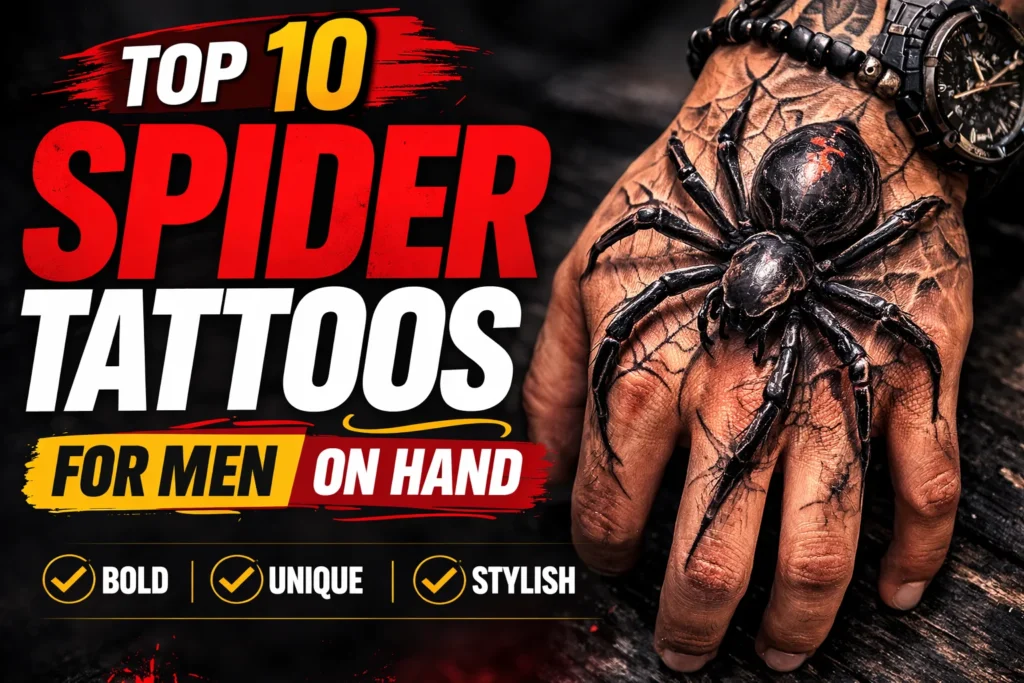
| Spider | Danger, patience, creativity | Spider Hand |
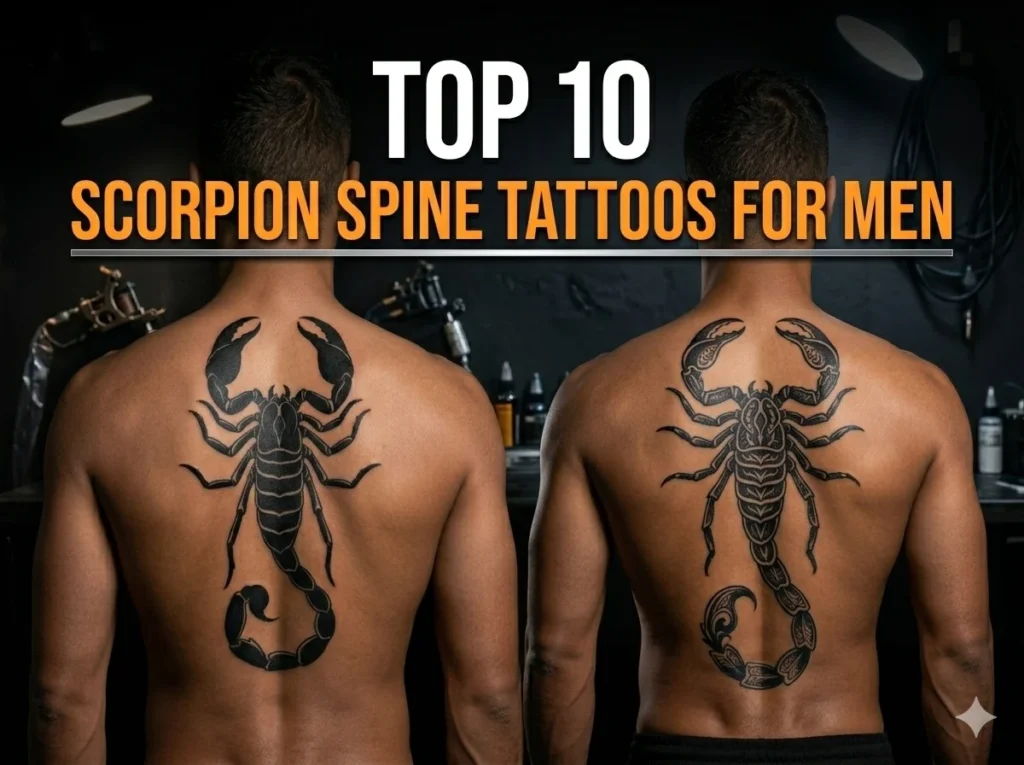
| Scorpion | Protection, power, intensity | Scorpion Tattoos |
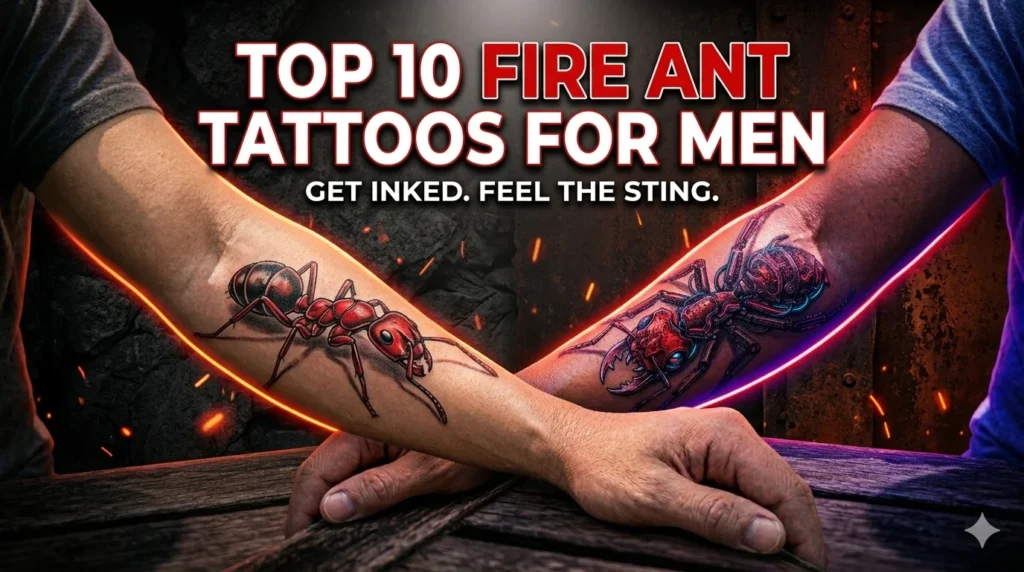
| Fire Ant | Strength, teamwork, resilience | Fire Ant Forearm |
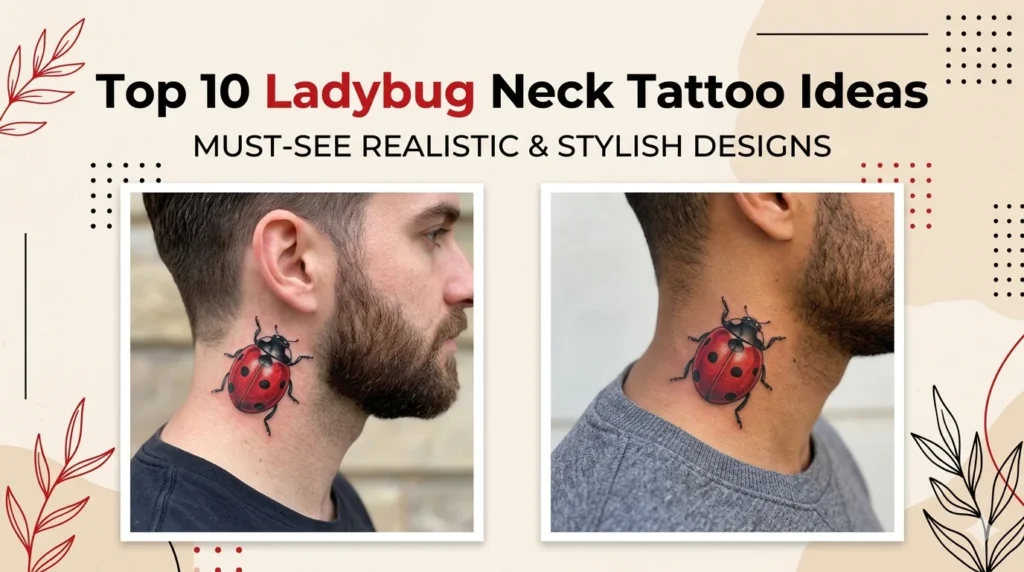
| Ladybug | Luck, protection, transformation | Ladybug Neck |
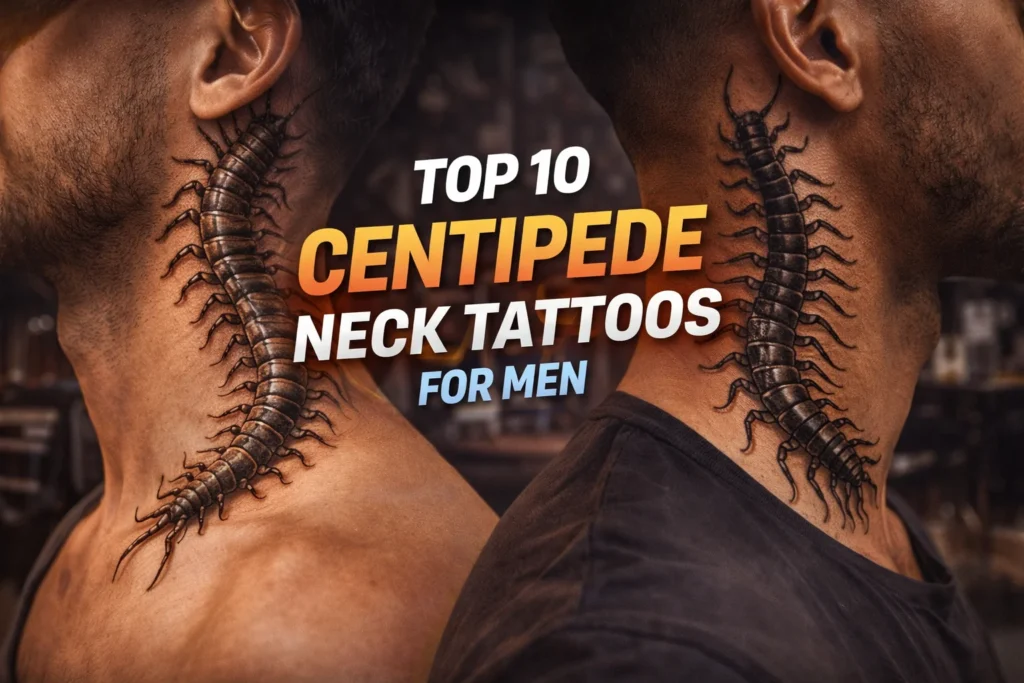
| Centipede | Resilience, adaptability, survival | Centipede Tattoos |
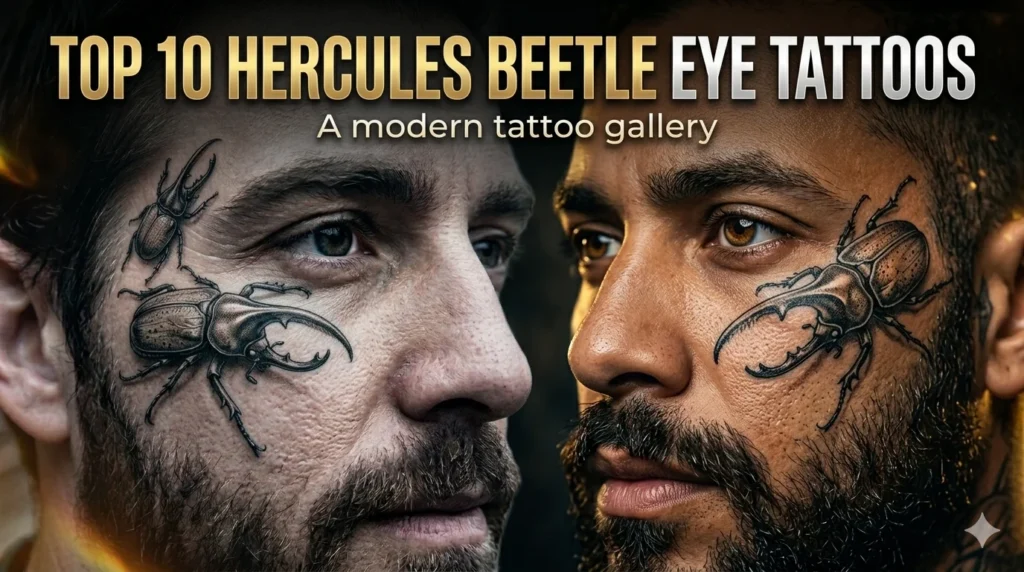
| Hercules Beetle | Strength, persistence, power | Hercules Beetle |
Religious & Spiritual Symbols
| Symbol | Primary Meaning | Examples |
|---|---|---|
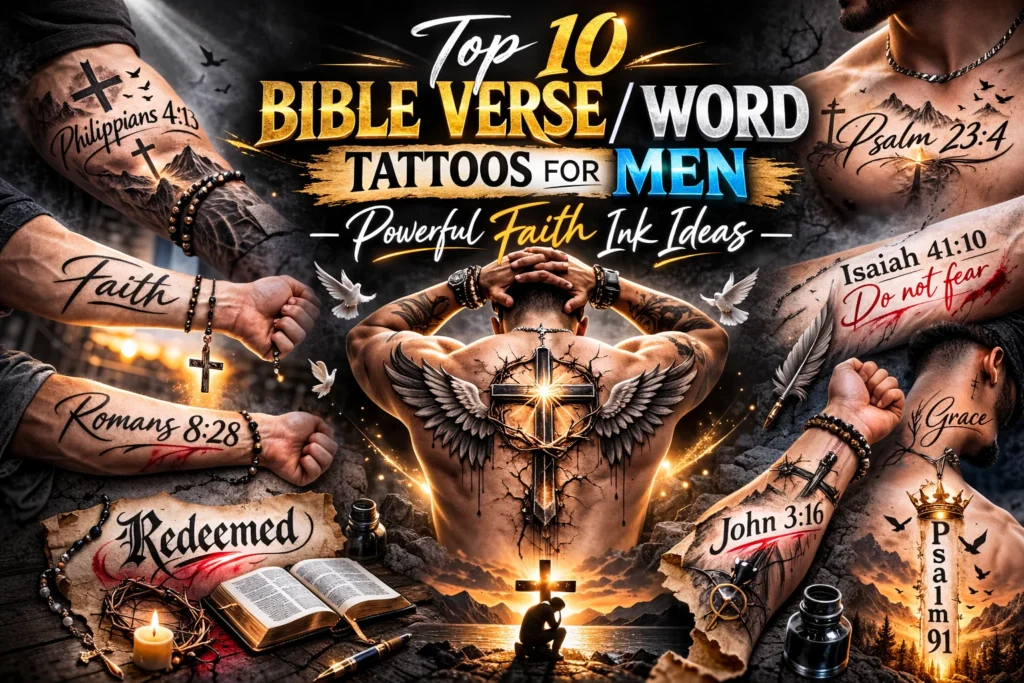
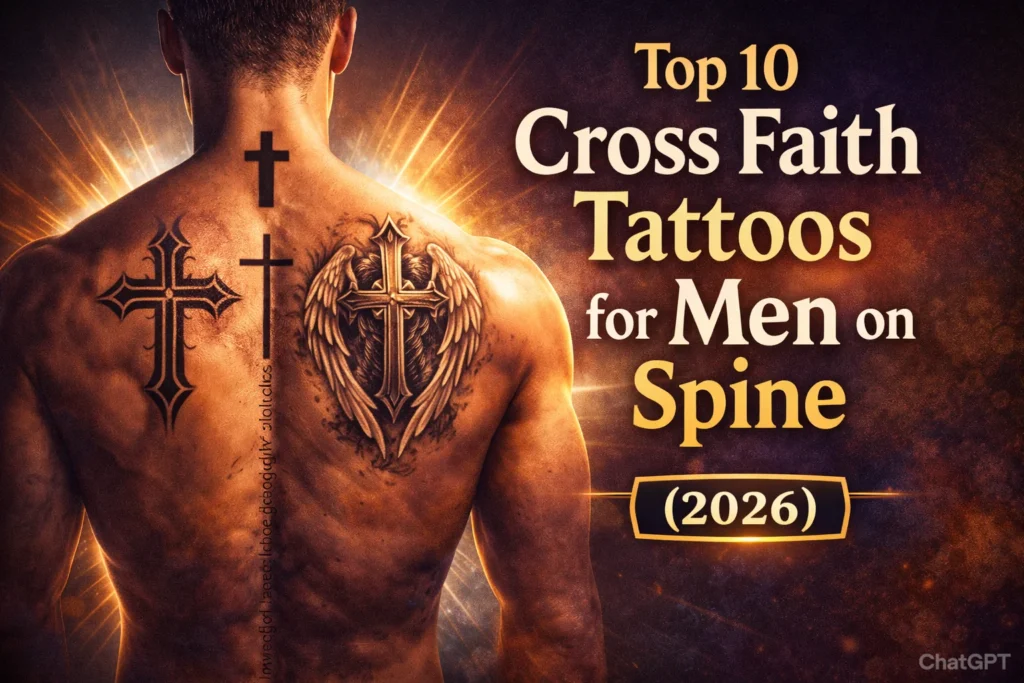
| Cross | Faith, sacrifice, salvation | Cross Faith |
| Bible Verse | Scripture, guidance, hope | Bible Verse |
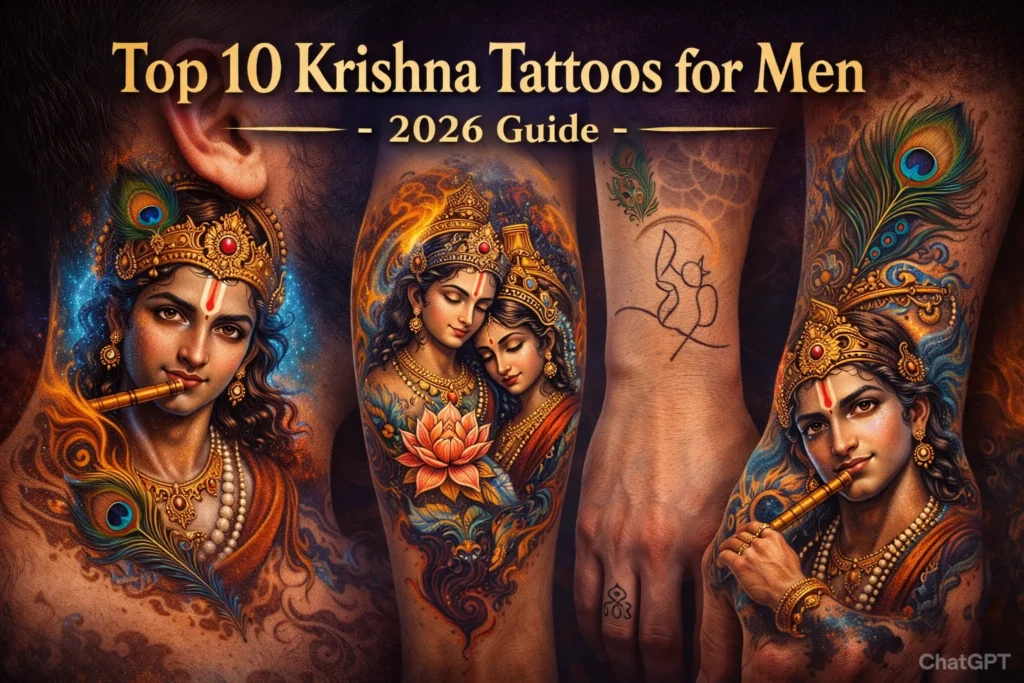
| Krishna | Devotion, love, divine protection | Krishna Tattoos |
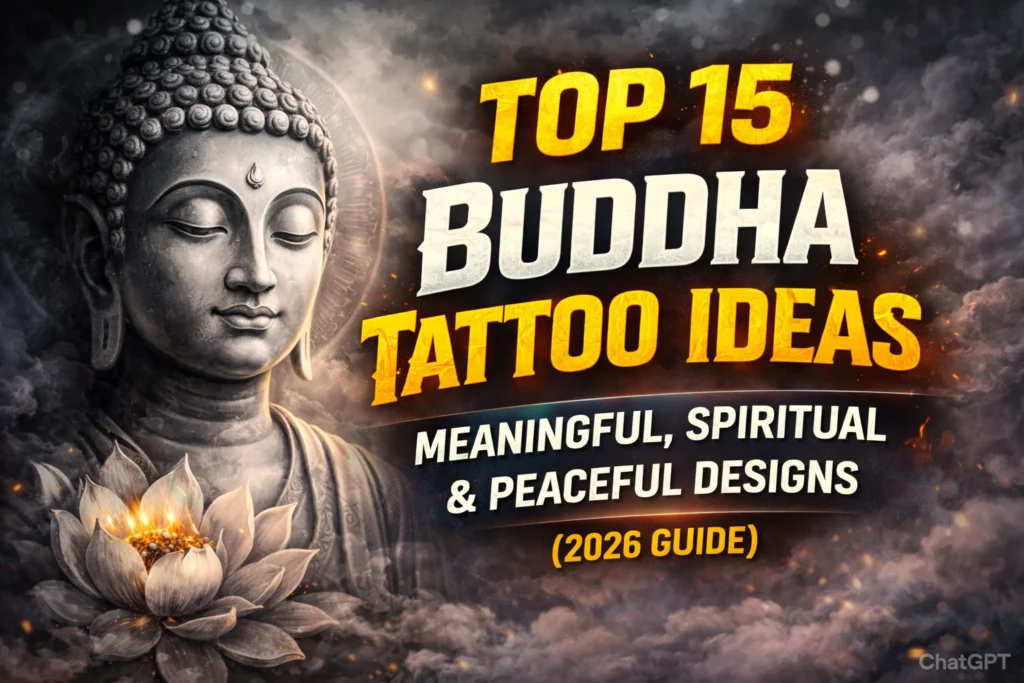
| Buddha | Peace, enlightenment, wisdom | Buddha Tattoos |
| Om | Universe, spirituality, meditation | — |
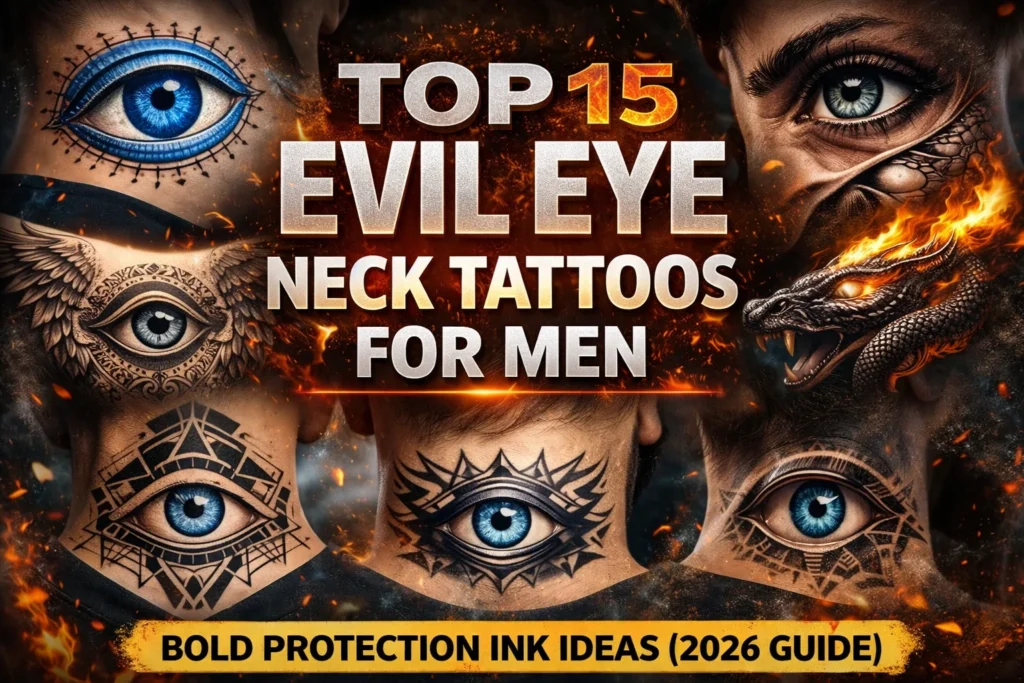
| Evil Eye | Protection from negative energy | Evil Eye Neck |
Nature & Dark Symbols
| Symbol | Primary Meaning | Examples |
|---|---|---|
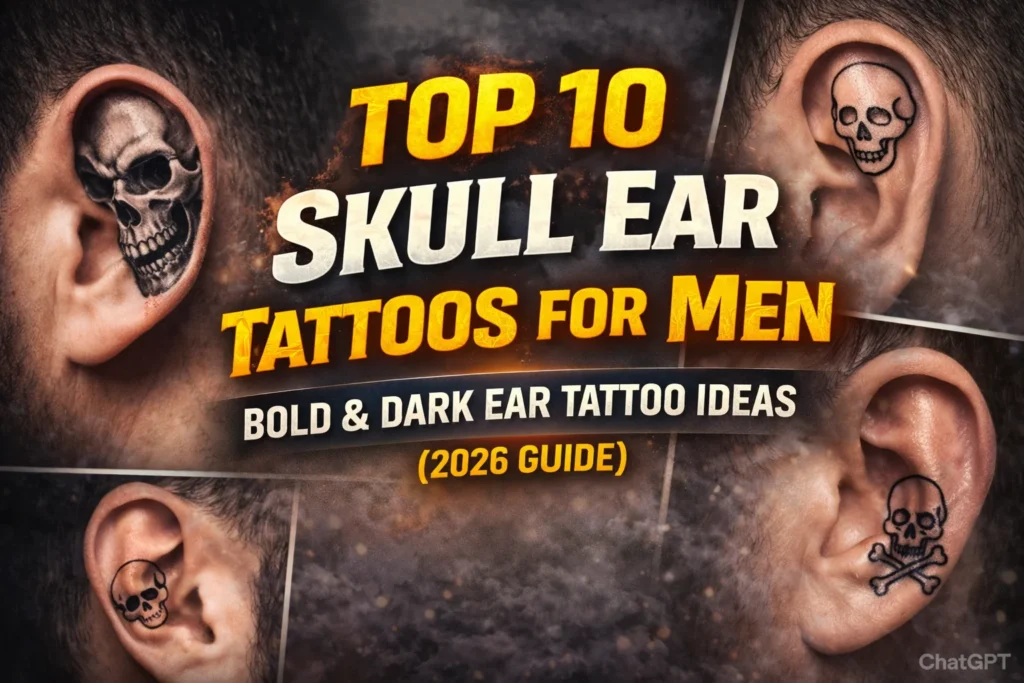
| Skull | Mortality, rebellion, strength | Skull Ear |
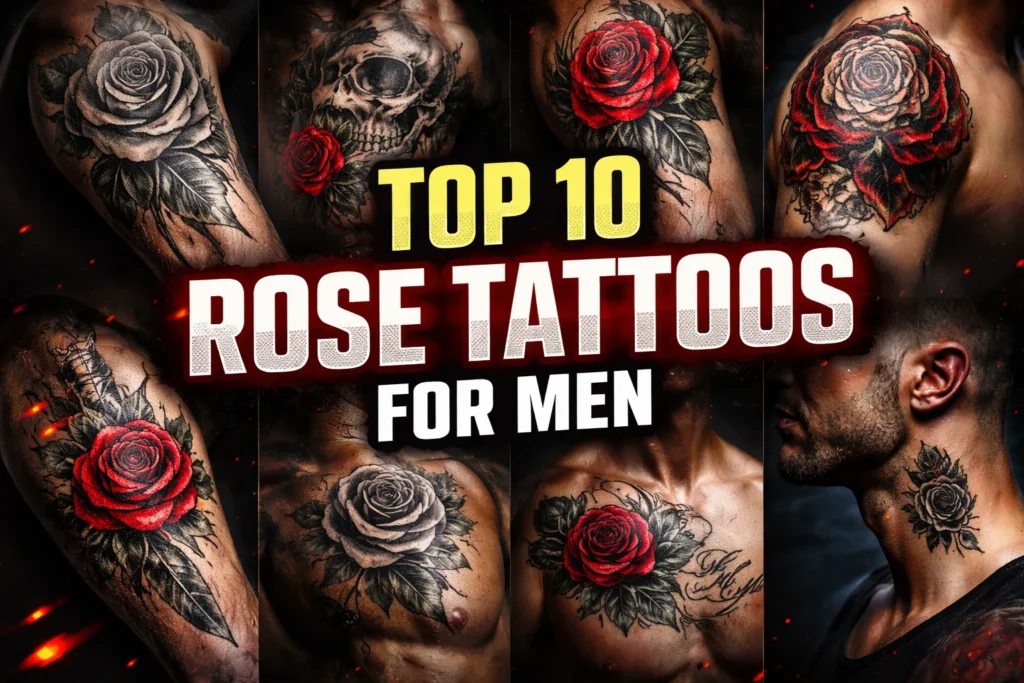
| Rose | Beauty, love, balance | Rose Tattoos |
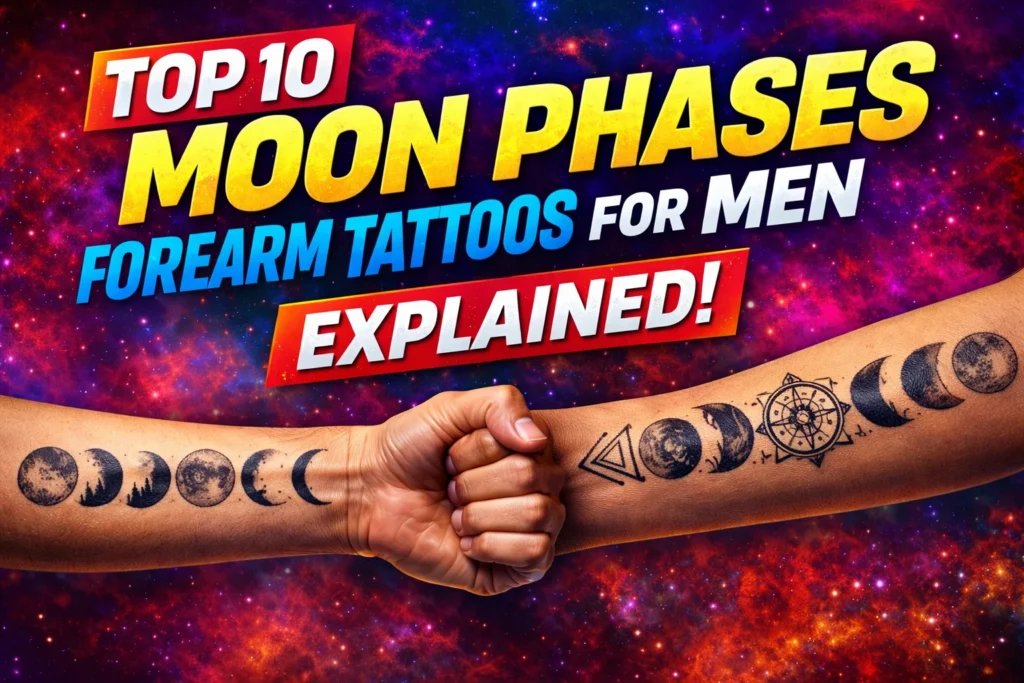
| Moon | Cycles, mystery, intuition | Moon Phases Forearm |
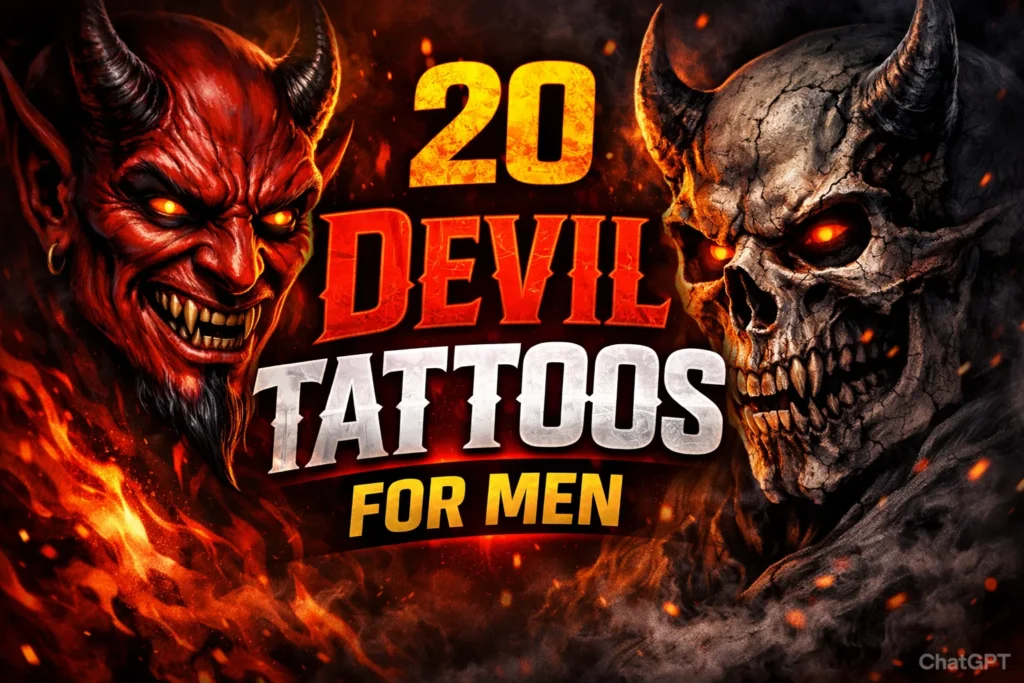
| Devil | Rebellion, power, temptation | Devil Tattoos |
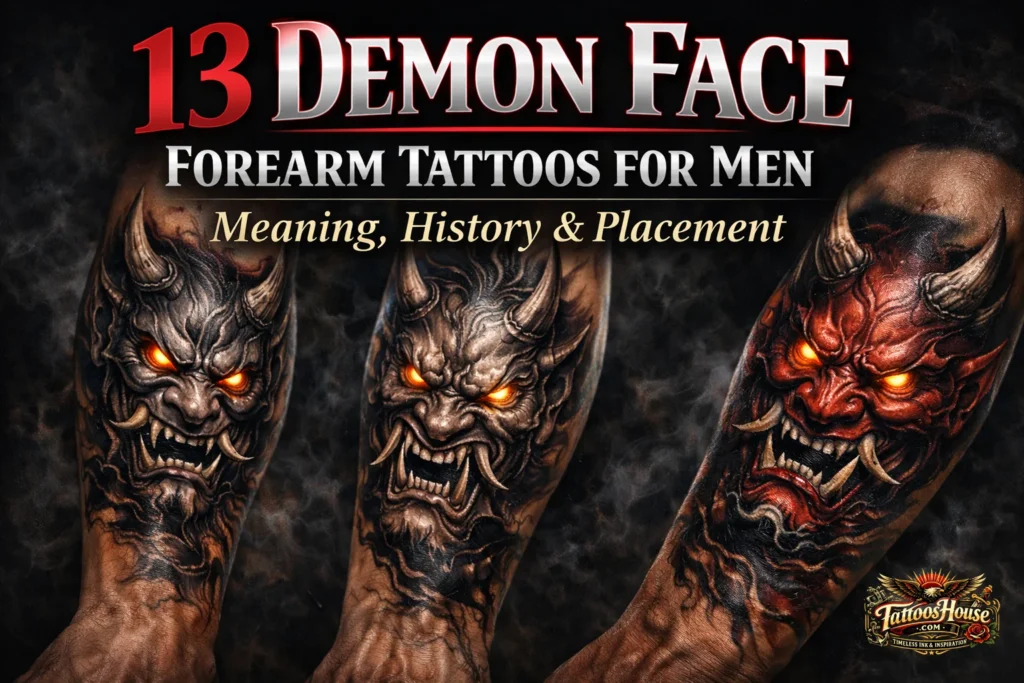
| Demon Face | Protection, warding off evil | Demon Face Forearm |
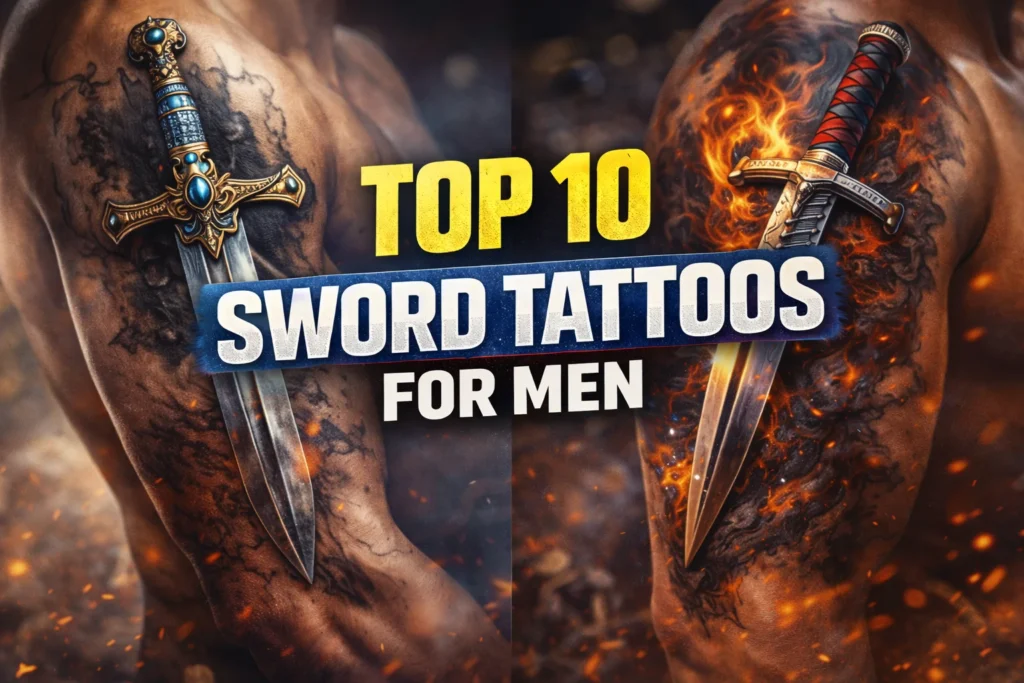
| Sword | Honor, battle, truth | Sword Tattoos |
6. Best Placements for Tattoos on Men
The placement of tattoos for men affects visibility, pain, how the design ages, and even your career options.
Forearm (Most Popular for First-Timers)
Pain level: Low-Medium
Visibility: High (can be covered with long sleeves)
Best for: First tattoos, detailed work, vertical designs, sleeves
Why forearm is the #1 placement:
- Prime visibility when you want to show it
- Easy to cover with button-down shirts
- Moderate pain (muscle padding)
- Natural canvas for vertical designs
See: Wolf Forearm, Snake Forearm, Moon Phases Forearm, Demon Face Forearm, Japanese Forearm, Zombie Forearm
Chest
Pain level: High (especially near sternum and nipples)
Visibility: Medium (shirt on/off)
Best for: Large pieces, symmetrical designs, memorial tattoos
The chest is the “warrior’s canvas” — visible when you want to display strength, hidden when you need professionalism. See: Dangerous Wolf Chest, Lion Chest
Shoulder
Pain level: Low-Medium
Visibility: Medium
Best for: First tattoos, starting sleeves, traditional designs
The shoulder has thick skin and muscle padding, making it one of the least painful placements. See: Swallow Shoulder
Neck
Pain level: High (thin skin, many nerve endings)
Visibility: Very High
Best for: Small bold designs, statements
Consider your career before getting a neck tattoo. While increasingly accepted, some industries still discriminate. See: Evil Eye Neck, Dragon Neck
Hand & Fingers
Pain level: High (bones, thin skin)
Visibility: Very High
Best for: Small symbols, wedding ring tattoos
Hand tattoos fade faster than other placements due to sun exposure and frequent washing. See: Spider Hand
Ear
Pain level: Medium-High
Visibility: High (unless hair covers)
Best for: Tiny detailed designs (1-2 inches)
Ear tattoos are trending for men who want subtle ink with high impact. See: Skull Ear, Ladybug Neck
Sleeves (Full & Half)
Pain level: Medium-High (cumulative over multiple sessions)
Visibility: High
Best for: Large-scale cohesive designs
A full sleeve is a commitment of 10-30+ hours across multiple sessions. Most artists recommend starting with a half-sleeve. See: Falcon Sleeve
7. Tattoo Pain: Separating Myth from Reality
What Does Tattoo Pain Actually Feel Like?
Most people describe tattoo pain as:
- “Cat scratching sunburned skin” (most common)
- “Buzzing with occasional sharp stings”
- “Annoying rather than unbearable”
“One person can’t tell you the pain because everyone has a different threshold for it. I try to tell people not to go by what their friends tell them because no one else is you. I’ve seen 300-pound bikers looking like they were ready to cry and pass out, and I’ve also seen teachers looking like it was nothing.” — Greg Phipps, Tattoo Paradise artist
Scientific Explanation
Pain during tattooing occurs because needles penetrate the dermis (second layer of skin) at 50-3,000 punctures per minute. This triggers your body’s pain receptors. However, your brain releases endorphins (natural painkillers) in response, which is why the pain often feels “manageable” after the first few minutes.
Pain Chart by Body Location
| Location | Pain Level (1-10) | Why |
|---|---|---|
| Outer Forearm | 2-3 | Muscle padding, thicker skin |
| Shoulder | 2-4 | Muscle cushioning |
| Bicep | 3-4 | Muscle padding |
| Thigh | 3-4 | Large muscle area |
| Calf | 3-5 | Muscle, but closer to bone |
| Inner Forearm | 4-5 | Thinner skin, closer to bone |
| Chest (outer) | 5-7 | Thin skin over bone |
| Back | 4-6 | Varies by area |
| Wrist | 5-6 | Bone proximity |
| Ear | 5-7 | Thin cartilage |
| Hand | 6-8 | Bones, tendons, thin skin |
| Neck | 7-9 | Many nerve endings, thin skin |
| Sternum/Chest center | 8-9 | Directly over bone |
| Ribs | 8-10 | No muscle, thin skin over bone |
| Elbow (directly on) | 8-10 | Bone with no padding |
| Armpit | 9-10 | Extremely sensitive skin |
Tips to Reduce Pain
- Get good sleep the night before (fatigue increases pain sensitivity)
- Eat a meal 1-2 hours before (low blood sugar = more pain)
- Stay hydrated
- Avoid alcohol for 24 hours before (thins blood, increases bleeding)
- Don’t take painkillers before (many thin blood)
- Bring distractions (music, podcasts, conversation)
- Use numbing cream (ask your artist first — some won’t work with it)
8. Tattoo Cost Guide: How Much to Budget
Pricing Models
| Model | Description | Typical Range |
|---|---|---|
| Hourly Rate | Most common for custom work | 100−500+ per hour |
| By Piece | Small, simple flash designs | 50−500 |
| Day Rate | Full day (6-8 hours) | 600−2,500+ |
Cost by Size
| Size | Description | Typical Cost |
|---|---|---|
| Micro (0.5-1 inch) | Tiny symbols, dots | 50−100 |
| Small (2-3 inches) | Simple designs, words | 100−300 |
| Small-Detailed (2-3 inches) | Detailed small work | 200−500 |
| Medium (4-6 inches) | Palm-sized | 300−800 |
| Large (7-10 inches) | Hand/forearm-sized | 500−1,500 |
| Half-Sleeve | Shoulder to elbow OR elbow to wrist | 800−2,000 |
| Full Sleeve | Shoulder to wrist | 2,000−5,000+ |
| Full Back/Chest | Large-scale coverage | 3,000−10,000+ |
What Determines Cost?
| Factor | Impact on Price |
|---|---|
| Artist reputation | Famous artists = $500+/hour |
| Location | NYC/LA > rural areas |
| Color vs. Black/Gray | Color takes longer = more expensive |
| Detail level | Realism > Traditional |
| Placement | Difficult areas (ribs) may cost more |
| Custom vs. Flash | Custom design > pre-drawn |
| Shop overhead | Private studios may charge more |
Hidden Costs to Consider
- Tip: 15-25% of total cost is standard (30−500+)
- Aftercare products: $20-50 (ointment, lotion, sunscreen)
- Touch-ups: Sometimes free, sometimes $50-200
- Travel: If you seek a specific artist
- Time off work: Healing may require 1-3 days
9. Tattoo Aftercare Essentials
Proper aftercare ensures your tattoo for men heals beautifully and lasts for years.
First 24 Hours
- Keep bandage on for 2-24 hours (follow artist’s instruction)
- Wash hands thoroughly before touching tattoo
- Remove bandage in clean environment
- Wash gently with unscented antibacterial soap
- Pat dry with clean paper towel (no cloth towels — they harbor bacteria)
- Apply thin layer of tattoo ointment (Aquaphor, A&D, or artist-recommended brand)
Days 2-14 (Healing Phase)
| ✅ Do | ❌ Don’t |
|---|---|
| Wash 2-3 times daily | Submerge in water (baths, pools, hot tubs, oceans) |
| Apply light, unscented moisturizer | Scratch or pick at peeling skin |
| Wear loose, breathable clothing | Expose to direct sunlight |
| Let peeling happen naturally | Apply heavy lotions, Vaseline, or Neosporin |
| Sleep on clean sheets | Re-bandage after first day |
| Use clean towels | Shave over healing tattoo |
| Let pets lick the tattoo | |
| Go to gym/sweat heavily for 5-7 days |
Weeks 2-4 (Peeling and Itching)
- Itching is normal — Do NOT scratch! (Slap gently instead)
- Peeling skin — Let it fall off naturally (don’t pick!)
- No tanning — Sun exposure fades healing tattoos dramatically
- Avoid pools/oceans for minimum 3-4 weeks
Long-Term Care
| Task | Frequency | Why |
|---|---|---|
| Sunscreen (SPF 30+) | Every time tattoo is exposed to sun | UV rays fade ink, blur lines |
| Moisturizing | Daily | Keeps ink vibrant, skin healthy |
| Touch-ups | As needed (years later) | Fix fading, especially on hands/feet |
Signs of Infection (Seek Medical Attention)
- Spreading redness beyond tattoo area
- Yellow or green discharge
- Severe swelling
- Fever or chills
- Tattoo feels hot to the touch after 3+ days
10. Tattoo Removal & Cover-Ups: What You Need to Know
Sometimes tattoos for men need to be removed or covered due to changed preferences, ex-partner names, poor quality work, or career requirements.
Laser Tattoo Removal
How it works: High-intensity laser breaks down ink particles into smaller fragments that your immune system removes.
Time required: 5-15 sessions, 6-8 weeks apart
Cost: 200−500 per session (small tattoo), 1,000−5,000+ total
Pain level: Moderate to high (described as “rubber band snapping on skin” — some say worse than getting tattooed)
Effectiveness:
- Black ink: 90-95% removal possible
- Blue/green ink: 50-70% removal
- Yellow/white ink: Very difficult to remove
Tattoo Cover-Ups
A cover-up is a new tattoo designed to go over an existing tattoo. Cover-ups must be:
- 30-50% larger than the original
- Darker than the original (black and dark colors work best)
- Strategically designed to hide old lines
Cost: Similar to new tattoos, sometimes more due to complexity
Comparison of Removal Methods
| Method | Description | Success Rate | Scar Risk | Cost Range |
|---|---|---|---|---|
| Laser | Breaks down ink particles | High (black ink) | Low-Medium | 1,000−5,000 |
| Saline | Salt solution draws ink to surface | Moderate | Low | 500−2,000 |
| Dermabrasion | Sands away skin layers | Low-Moderate | High | 1,000−3,000 |
| Excision | Cuts out tattoo, stitches skin | High (small tattoos) | High | 1,000−4,000 |
| Cover-Up | New tattoo over old | High (with good artist) | None | 300−2,000+ |
Key Facts About Removal
- Black ink removes easiest — Colors (especially green, yellow, white) are difficult
- Newer tattoos harder to remove — Wait 6-12 months after getting tattooed
- Professional tattoos harder than amateur — Deeper ink deposits
- Pain significant — Many say more painful than getting tattooed (but sessions are shorter)
- Cost often 2-5x original — Consider this before getting impulsive ink
11. Tattoo Regret Statistics & Prevention
How Common is Tattoo Regret?
According to published research:
- 20-30% of Americans have at least one tattoo
- 10-20% of people with tattoos report some regret
- Most common regret reasons:
- Poor quality work (35%)
- Ex-partner names (25%)
- Placement issues (15%)
- Career concerns (10%)
- Changed personal meaning (10%)
How to Avoid Tattoo Regret
| ✅ Do | ❌ Don’t |
|---|---|
| Research your artist thoroughly | Get a tattoo the same day you think of it |
| Wait 3-6 months before committing to a design | Get a partner’s name (unless you’re married) |
| Start with a small tattoo in a concealable location | Get a neck/hand tattoo as your first |
| Pay for quality (cheap tattoos often require expensive removal) | Drink alcohol before your appointment |
| Listen to your artist’s placement/size advice | Rush the process |
| Consider how the design will age (bold lines > fine lines) | Get a tattoo to impress someone else |
12. Myths & Misconceptions About Tattoos for Men
Myth 1: Tattoos Are Unprofessional and Prevent Employment
The truth: It depends on the industry and placement. Creative fields (design, tech, entertainment) are increasingly accepting of visible tattoos. Conservative fields (law, finance, medicine) may still prefer concealable placements.
Solution: Forearm tattoos can be covered with long sleeves. Avoid neck, hand, and face tattoos until you’re established in your career.
Myth 2: You Can’t Donate Blood If You Have Tattoos
The truth: In most places, you must wait 3-12 months after getting tattooed at a licensed shop before donating blood. The waiting period exists to screen for bloodborne diseases (hepatitis). Shops with proper sterilization = lower risk = waiting period may be waived.
Always check local Red Cross or blood bank guidelines.
Myth 3: You Can’t Get an MRI With Tattoos
The truth: MRI machines use powerful magnets. In rare cases, people with tattoos report mild burning or discomfort during MRIs. This is caused by metallic compounds in some tattoo inks (especially older or low-quality inks). Modern, high-quality inks rarely cause issues.
What to do: Always inform your radiologist about your tattoos before an MRI.
Myth 4: Tattoos Are Only for Rebels, Criminals, or Bikers
The truth: This stereotype has dramatically shifted. Today, tattoos for men are worn by CEOs, doctors, teachers, athletes, and artists. In 2026, tattoos are mainstream. According to a 2014 study, 20% of Americans had tattoos, up from 14% in 2007. By 2026, estimates exceed 35% for men under 40.
“My gut reaction (to those with tattoos) is that they’re trying to make a statement. They’re definitely saying — I don’t really know what they’re saying.” — Nick Schrock, engineering senior, 2003
Myth 5: Tattoos Are Addictive
The truth: Tattoos aren’t chemically addictive. However, the endorphin rush during tattooing can be pleasurable for some people. The “addiction” is psychological — the desire to collect more art, or the enjoyment of the transformative experience.
Myth 6: Dark Skin Can’t Get Tattoos
The truth: Absolutely false. Skilled tattoo artists know how to work with melanin-rich skin. Dark skin tattoos beautifully — the contrast between ink and skin is just different.
Tips for dark skin:
- Avoid white ink (won’t show)
- Black and dark colors work best
- Find artists with diverse portfolios
- Realism may be more challenging; bold styles (traditional, tribal) excel
Myth 7: Red Ink Causes Allergic Reactions
The truth: Red ink is the most common ink to cause allergic reactions, but this is rare (less than 1% of people). Symptoms include itching, bumps, and swelling limited to the red areas. Most people tolerate red ink fine.
Myth 8: Tattoos Are Painful Only During Application
The truth: The worst pain is during application. Afterward, tattoos feel like sunburn for 3-7 days — tender, warm, and sensitive. Healing is uncomfortable but manageable with proper aftercare.
Myth 9: Your Views Change, But Tattoos Can’t
“Your views change, but tattoos can’t.” — Nick Schrock
The truth: This is one of the most common concerns — and it’s valid. However, many men view their tattoos as time capsules — snapshots of who they were at that moment in their lives. Even if your views change, the tattoo marks your journey. Plus, cover-ups and removals exist if you truly outgrow a design.
Myth 10: You Have to Be Extremely Muscular to Get a Tattoo
The truth: Tattoos look great on ALL body types — slim, muscular, or heavier. The key is choosing designs that work with your body’s natural curves, not against them. Good artists will advise on placement and scaling based on YOUR unique anatomy.
13. Cultural and Religious Perspectives on Tattoos
Christianity and Tattoos
Leviticus 19:28 states: “Do not cut your bodies for the dead or put tattoo marks on yourselves. I am the Lord.”
Many Christians interpret this as a prohibition against tattoos. However, others note:
- This was part of Old Testament law for ancient Israelites
- Many Christians eat pork and wear mixed fabrics (also forbidden in Leviticus)
- New Testament emphasizes inner faith over external appearance
Modern Christian tattoos often feature:
- Crosses
- Bible verses (Link)
- Ichthys (fish symbol)
- Jesus portraits
- Angels
Islam and Tattoos
Most Islamic scholars consider permanent tattoos haram (forbidden) because:
- They alter Allah’s creation
- They involve unnecessary pain
- They block water from reaching skin during wudu (ritual washing before prayer)
However:
- Temporary tattoos (henna) are widely accepted
- Some Shia scholars permit tattoos
- Many modern Muslim men get tattoos despite religious prohibitions
Judaism and Tattoos
Traditional Judaism prohibits tattoos based on Leviticus 19:28. However, Holocaust survivors had identification numbers tattooed by Nazis — these are exempt from religious prohibition. Today, many secular Jews get tattoos, and the prohibition is less observed in Reform and Conservative movements.
Note: Tattoos do NOT prevent Jewish burial (common myth).
Buddhism and Tattoos
Buddhism has no universal prohibition against tattoos for men. In fact:
- Sak Yant tattoos are sacred in Thailand, Cambodia, and Myanmar
- Monks often apply these protective tattoos using bamboo needles
- Tattoos are considered temporary like the body itself
However, Buddha images as tattoos are controversial in some Buddhist-majority countries. In Sri Lanka and Thailand, tourists with Buddha tattoos have been detained or deported. See: Buddha Tattoo Ideas
Hinduism and Tattoos
Hinduism has no central prohibition against tattoos. In fact:
- Traditional Mehndi (henna) is integral to weddings and festivals
- Ramnam tattoos (writing “Ram” on skin) are devotional practices
- Many Hindus get tattoos of gods (Krishna, Shiva, Ganesh) as expressions of faith
Cultural Appropriation Concerns
When getting tattoos for men from other cultures, consider:
- Polynesian/Maori tribal designs: Traditionally earned through specific rituals. Some consider it disrespectful for outsiders to wear these designs without understanding their meaning.
- Native American imagery: Be respectful. Avoid sacred symbols unless you have tribal affiliation.
- Japanese Irezumi: Generally open to outsiders but learn the meanings before choosing.
Best practice: Research the meaning. Understand the culture. Ask your artist. Avoid sacred/protected symbols.
14. Tattoo Trends in 2026
Top Trending Motifs
| Ranking | Motif |
|---|---|
| 1 | Dragons |
| 2 | Flowers |
| 3 | Snakes |
| 4 | Wolves |
| 5 | Skulls |
Trending Styles
- Japanese/Irezumi — Massive revival; men seek authentic, meaningful designs
- Fine Line/Minimalist — Subtle, modern, professional-friendly
- Patchwork Sleeve — Multiple smaller pieces assembled over time (vs. one cohesive sleeve)
- Blackwork — Bold, dramatic, high contrast
- Geometric/Sacred Geometry — Precision and meaning combined
Placement Trends
- Ear tattoos — Up 200% since 2022
- Hand tattoos — Growing despite career concerns
- Chest panels — Replacing full chest pieces for easier concealment
15. How to Choose the Right Tattoo Artist
This is the single most important decision for your tattoo for men. A great artist can make average art look amazing. A bad artist can ruin a great design.
Step 1: Research
- Instagram is the #1 portfolio platform for tattoo artists
- Search hashtags: #yourcitytattoo, #styleyoulike (e.g., #japanesetattoo, #realismtattoo)
- Google Reviews and Yelp — Read negative reviews carefully
- Shop websites — Look for “healed photos” (not just fresh)
Step 2: Evaluate Portfolios
| ✅ Look For | ❌ Avoid |
|---|---|
| Consistent style | Wildly inconsistent quality |
| Clean lines | Blowouts (ink spreading under skin) |
| Smooth shading | Patchy, uneven color |
| Healed photos | Only fresh tattoos (healed = truth) |
| Tattoos on your skin tone | Only light skin examples |
Step 3: Visit the Shop
- Cleanliness: Does it smell clean? Are surfaces wiped? Are gloves visible?
- Autoclave: Ask to see their sterilization equipment (good shops will show you)
- Attitude: Do they listen to your ideas? Or push their own?
Step 4: Consultation
Most reputable shops offer free consultations (15-30 minutes). Bring:
- Reference images
- Placement ideas (or photos of your body part)
- Questions about cost, time, and healing
Step 5: Trust Your Gut
- If something feels off — leave.
- If they won’t show you healed photos — leave.
- If the shop is obviously dirty — leave.
- If they pressure you into a design you don’t love — leave.
Red Flags to Watch For
| Red Flag | Why It’s a Problem |
|---|---|
| Prices too good to be true | Cheap tattoos often require expensive removal |
| Won’t show healed work | Hiding poor quality |
| Works from home/kitchen | Lack of sterile environment |
| Won’t do consultation | Doesn’t care about your input |
| Apprentices doing complex work | Not yet skilled enough |
16. First-Timer’s Guide: What to Expect
Before Your Appointment
1-2 weeks before:
- Moisturize the area daily
- Stay out of the sun (don’t show up sunburned)
- Don’t schedule during vacations (no pools/ocean for 3-4 weeks after)
The day before:
- Get good sleep
- Hydrate
- No alcohol (thins blood, increases bleeding)
The day of:
- Eat a full meal 1-2 hours before
- Shower (be clean!)
- Wear loose, comfortable clothing that allows access to placement area
- Bring:
- ID
- Payment (plus tip)
- Snacks and water (for long sessions)
- Headphones
- Phone charger
During the Appointment
- Step 1: Design review — Artist shows you the stencil. This is your last chance to make changes. SPEAK UP NOW.
- Step 2: Stencil application — Artist cleans area, applies stencil. You approve placement in mirror.
- Step 3: Tattooing begins — First few minutes are the worst. Then endorphins kick in.
- Step 4: Pain management — You can ask for breaks, but each break resets endorphins (pain may feel worse after). Most artists recommend powering through short sessions.
- Step 5: Bandaging — Artist cleans tattoo, applies ointment and bandage.
After the Appointment (First 24 Hours)
- Leave bandage on for artist-recommended time (2-24 hours)
- Don’t peek — you’ll be fine
- Don’t drink alcohol — thins blood, increases swelling
- Don’t take NSAIDs (Advil, Aleve) — also thin blood. Tylenol is okay.
Psychological Preparation
- Nerves are normal. Most people feel anxious before their first tattoo for men.
- The first 5 minutes are the worst. Then endorphins help.
- You’re not “weak” if it hurts. Everyone’s pain tolerance is different.
- Claustrophobia? Some people feel trapped during long sessions. Tell your artist — they’ll give you breaks.
17. Frequently Asked Questions
Do tattoos hurt?
Yes, but pain varies by location (outer forearm = low, ribs = high). Most describe it as “cat scratching sunburn.”
How much do tattoos cost?
Small tattoos start at 50−150.Half−sleeves800-2,000. Full sleeves 2,000−5,000+.Hourlyrates150-400.
How long do tattoos take to heal?
Surface healing: 2-3 weeks. Complete healing: 4-6 weeks.
Can I donate blood if I have tattoos?
Most places require a 3-12 month waiting period after getting tattooed at a licensed shop.
Do tattoos affect job opportunities?
Some industries still discriminate, especially against visible tattoos (neck, hands, face). Forearm tattoos can be covered.
How do tattoos age?
All tattoos fade and spread slightly over decades. Sunscreen dramatically slows aging. Bold traditional styles age better than fine-line.
Can I get an MRI with tattoos?
Yes, but some people report mild burning (rare). Always inform your radiologist.
What’s the most popular first tattoo placement?
Forearm or shoulder — moderate pain, easy to show/hide.
Can I get a tattoo if I have dark skin?
Absolutely. Skilled artists know how to work with melanin-rich skin.
Are tattoos addictive?
Not chemically, but the endorphin rush can be pleasurable, leading some to want more.
What’s the most painful placement?
Ribs, sternum, armpit, elbow, knee, neck, and hands.
What’s the least painful placement?
Outer forearm, shoulder, bicep, thigh, calf.
Does numbing cream work?
Yes, but ask your artist first. Some artists won’t work with it (changes skin texture).
Does pain get worse over time?
During a session, yes. After 2-3 hours, your skin becomes tender, and endorphins decrease.
Can I take painkillers before?
No — most painkillers thin blood. Tylenol is sometimes okay (ask your artist).
Should I tip my tattoo artist?
Standard is 15-25% of total cost.
Why are some artists 500/hourwhileothersare150?
Experience, reputation, demand, and location. Famous artists charge more.
Do I pay for consultation?
Most reputable shops offer free consultations.
Is a cheap tattoo worth it?
Almost never. Cheap tattoos often require expensive removal or cover-ups.
Do I pay hourly or by piece?
Both exist. Hourly is more common for custom work. By piece is more common for flash (pre-drawn).
How often should I wash my new tattoo?
2-3 times daily for the first 2 weeks.
Can I swim with a new tattoo?
No — wait 3-4 weeks minimum (pools, oceans, lakes, hot tubs).
Can I workout with a new tattoo?
Wait 5-7 days for gym. Avoid anything that stretches or sweats heavily on the tattoo.
My tattoo is peeling — is that normal?
Yes — peeling occurs days 5-14. Don’t pick! Let it fall off naturally.
My tattoo is itchy — what do I do?
Don’t scratch! Slap gently, apply light moisturizer, or use a cold compress.
How do I know if my tattoo is infected?
Spreading redness, yellow/green discharge, severe swelling, fever, or heat from the area.
Can I use sunscreen on a healing tattoo?
No — wait until fully healed (4-6 weeks). Then use SPF 30+ every time.
When can I shave over my tattoo?
Wait 3-4 weeks until completely healed.
How long until I can soak in a bath?
Wait 3-4 weeks. Showers are fine (but don’t soak).
Should I re-bandage my tattoo?
No — after the first bandage is removed, never re-bandage. Tattoos need air to heal.
How do I choose a tattoo design?
Browse galleries (Pinterest, Instagram), save images you like, identify patterns, then work with an artist to create something unique.
Should I get a meaningful tattoo or something I just like?
Both are valid. “I like how it looks” is a perfectly good reason.
What are the most popular tattoo symbols for men?
Dragon, wolf, lion, snake, skull, cross, compass, anchor, rose, eagle.
Can I bring my own design?
Yes — but be open to your artist’s suggestions. What looks good on paper may not work as a tattoo.
How do I know if my design is too small?
Your artist will tell you. Small designs with lots of detail will “bleed together” over time as ink spreads.
Should I get color or black and grey?
Personal preference. Black/grey: timeless, heals faster, ages better. Color: vibrant, artistic, requires more maintenance.
Can I get a tattoo of a celebrity or copyrighted image?
Technically yes, but some artists refuse copyrighted work. And celebrities age — their faces will change, but your tattoo won’t.
What’s the best way to find inspiration?
Instagram (#tattooideas, #tattoosformen), Pinterest, Tattoos House (all our articles!), and asking friends with good tattoos.
Can I see how a design will look before getting it?
Most artists will apply a stencil. Some use digital mockups (for a fee).
How do I know if a design is “masculine”?
Don’t worry about this. If YOU like it, that’s all that matters.
How do I find a good tattoo artist near me?
Instagram search (#yourcitytattoo), Google Maps (read reviews), ask friends with good tattoos.
Should I choose an artist based on price?
No — choose based on portfolio and cleanliness. Cheap tattoos aren’t good; good tattoos aren’t cheap.
Can I negotiate tattoo prices?
No — it’s disrespectful. Artists set their rates based on skill and demand.
How do I know if a shop is clean?
Smells clean (not like smoke or animals)
Surfaces are wiped
Artists wear gloves and change them frequently
Autoclave (sterilization equipment) visible
Needles opened in front of you
Should my artist have tattoos themselves?
Many experienced artists say yes: “It’s important to go to an artist who is heavily tattooed” — Adam Forman
Can I bring friends to my appointment?
Most shops allow 1 friend. Don’t bring a crowd — space is limited, and you need to focus.
Can I listen to music or watch videos during my tattoo?
Yes — headphones are fine. Just stay still.
What if I don’t like the design during the appointment?
SPEAK UP. This is permanent. Your artist would rather adjust the design than have you hate it forever.
Can I get tattooed while sick?
No — reschedule. Your immune system is compromised, and you’ll heal poorly.
What if I faint during my tattoo?
It happens. Artists are trained to handle this. Tell them if you feel dizzy or nauseous.
Can tattoos be completely removed?
Black ink can be 90-95% removed with laser. Colors are harder. Complete removal (100%) is rare.
How many laser sessions does removal take?
5-15 sessions, 6-8 weeks apart.
Is laser removal more painful than getting tattooed?
Many say yes — but sessions are much shorter (5-15 minutes vs. hours).
Can any tattoo be covered up?
Most can, but cover-ups must be 30-50% larger and darker than the original.
How soon can I get a cover-up after my original tattoo?
Wait until fully healed (4-6 months minimum). Some artists recommend waiting 1+ year.
Does the Bible forbid tattoos?
Leviticus 19:28 prohibits “tattoo marks.” However, many Christians interpret this as Old Testament law not binding on Christians.
Are tattoos haram in Islam?
Most scholars consider permanent tattoos haram because they alter Allah’s creation and can block water during wudu.
Can I get a Buddha tattoo?
In Western countries, yes. But in Sri Lanka, Thailand, and Myanmar, Buddha tattoos on tourists have led to deportation.
Are tribal tattoos cultural appropriation?
It depends. Research the meaning. Avoid Polynesian/Maori tribal designs unless you have cultural connection or explicit permission.
Can I get a tattoo of a religious figure if I’m not religious?
You can, but be respectful. Some believers may find it offensive.
Can I get a tattoo if I have a medical condition?
Ask your doctor. Conditions affecting immune system, blood clotting, or skin healing may be contraindicated.
Can I get a tattoo if I have diabetes?
Yes, but healing may take longer. Work with your doctor and inform your artist.
Can I get a tattoo if I have psoriasis or eczema?
Avoid tattooing over active flare-ups. Tattooing over clear skin is usually fine.
Can I get a tattoo if I’m pregnant or nursing?
Most reputable artists refuse. Hormones affect skin elasticity and healing, and there’s risk of infection.
Can I get a tattoo if I have keloids (raised scarring)?
Probably not — tattoos can trigger keloid formation. Consult a dermatologist.
Do I need to disclose medications?
Yes — blood thinners, immunosuppressants, and acne medications (Accutane) affect tattooing.
Can I get a tattoo if I have HIV/Hepatitis?
Ethical artists will tattoo you if your viral load is undetectable and you have a doctor’s clearance. However, some shops have blanket policies.
What’s the risk of infection at a reputable shop?
Extremely low (less than 1%). Reputable shops follow OSHA bloodborne pathogen standards.
Can I get a tattoo while taking antibiotics?
Wait until you finish your course and are fully healed. Your immune system needs to focus on healing the tattoo.
Do tattoos cause cancer?
No scientific evidence links tattoos to cancer. Some inks contain trace heavy metals, but risk is extremely low.
Can I travel internationally with a fresh tattoo?
Yes, but avoid swimming (pools/oceans). Bring your own aftercare products (not all countries have your brands).
Will my tattoo affect airport security?
No.
Can I play sports with a healing tattoo?
Wait 5-7 days minimum. Sweat, friction, and impact can damage healing tattoos.
Can I tan with tattoos?
Yes, but sunscreen (SPF 30+) is non-negotiable. Tanning fades tattoos dramatically.
Will my tattoo stretch if I gain muscle?
Minor stretching is possible, but tattoos are surprisingly resilient. Rapid weight gain or loss (50+ pounds) may distort tattoos.
What does a wolf tattoo mean?
Loyalty, family, survival, leadership, ferocity. Link
What does a lion tattoo mean?
Courage, royalty, strength, leadership, pride. Link
What does a dragon tattoo mean?
Wisdom, strength, protection (Eastern); danger, power (Western). Link
What does a snake tattoo mean?
Transformation, healing, rebirth, danger. Link
What does a spider tattoo mean?
Danger, patience, creativity, mystery. Link
What does a scorpion tattoo mean?
Protection, power, intensity, death. Link
What does a skull tattoo mean?
Mortality, rebellion, strength, acceptance of death. Link
What does a rose tattoo mean?
Love, beauty, balance, life/death duality. Link
What does a swallow tattoo mean?
Loyalty, safe return, hope, freedom. Link
What does a phoenix tattoo mean?
Rebirth, resurrection, triumph over adversity. Link
Are Krishna tattoos disrespectful?
If done respectfully and thoughtfully, they are considered devotional art. Link
Are cross tattoos acceptable for non-Christians?
Yes — the cross is a widely recognized symbol, but some Christians may find it disrespectful if worn ironically.
What does the evil eye tattoo mean?
Protection from negative energy and jealousy. Link
Can I get a Bible verse tattoo?
Yes — very popular. Choose verses that hold personal meaning. Link
What does a Buddha tattoo symbolize?
Peace, enlightenment, wisdom, spiritual journey. Link
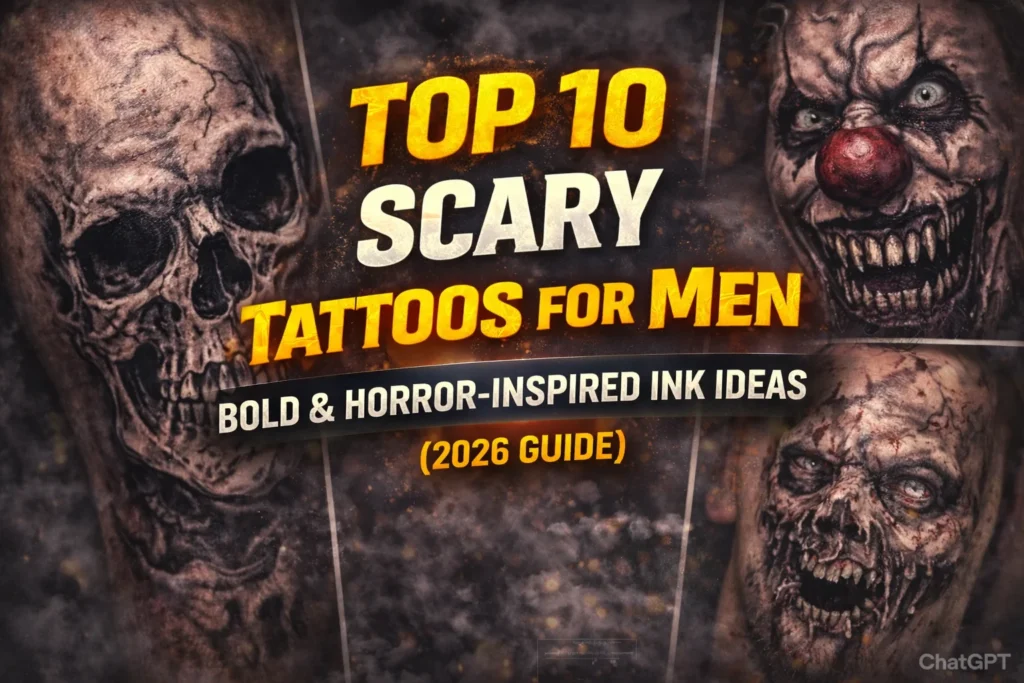
Why do men get scary/horror tattoos?
Self-expression, love of horror culture, symbolism of overcoming fear. Link
What do zombie tattoos represent?
Survival, resilience, rebirth, overcoming adversity. Link
What do demon face tattoos mean?
Protection, power, warding off evil. Link
What do devil tattoos symbolize?
Rebellion, temptation, power, duality of good/evil. Link
What is Tattoos House?
Tattoos House is your ultimate destination for tattoos for men — featuring thousands of design ideas, style guides, meaning explanations, and placement advice.
Does Tattoos House offer tattoo services?
No — we’re an inspiration and information resource. We help you find ideas and connect with artists.
How can I submit my tattoo to Tattoos House?
Contact us through our Contact Page.
Does Tattoos House have social media?
Yes — Instagram, Pinterest, Facebook, YouTube, Twitter, TikTok, and Threads. Links on our homepage.
How often does Tattoos House publish new articles?
Weekly. Subscribe to our social media for updates.
Is Tattoos House free to use?
Yes — completely free. We’re supported by advertising and affiliate partnerships.
Should I get a tattoo?
Only you can answer. Consider: placement (can you cover it for work?), design (will you still like it in 10 years?), and budget (can you afford a good artist?).
What’s the best age to get your first tattoo?
18+ (legal minimum in most places). Many artists recommend waiting until 21-25 when your brain has fully matured.
Will I regret my tattoo?
Only you know. Waiting 3-6 months after choosing a design before booking reduces regret risk.
How do I tell my parents about my tattoo?
Honesty. Show them the design, explain the meaning (even if just “I think it looks cool”), and give them time to adjust
What’s the one thing you wish you knew before getting tattooed?
Most people say: “I wish I’d known that cheap tattoos aren’t good and good tattoos aren’t cheap.”
Conclusion
Tattoos for men have evolved from ancient rituals to modern masterpieces. Whether you’re drawn to the bold lines of traditional old school, the vibrant symbolism of Japanese Irezumi, the raw power of a dangerous wolf chest piece, or the delicate beauty of a geometric mandala — your tattoo is your story.
At Tattoos House, we’ve created the most comprehensive resource for tattoo ideas for men on the internet. With over 30 detailed guides covering every style, every placement, and every meaning, you’re sure to find inspiration for your next piece — or your first.
Final Tips for Your Tattoo Journey
- Research — Find an artist whose style matches your vision
- Wait — Sit on your design for 3-6 months before committing
- Budget — Remember: good tattoos aren’t cheap
- Communicate — Speak up during consultation AND during the appointment
- Heal properly — Aftercare is 50% of a good tattoo
- Protect — Sunscreen forever
Remember: A tattoo is permanent. Choose designs that speak to who you are — not who you think you should be. And if you just think it looks cool? That’s enough.
Ready to get inked? Explore our Blog for more inspiration. Don’t forget to follow us on Instagram, Pinterest, Facebook, YouTube, Twitter, TikTok, and Threads for daily tattoo inspiration!
Tattoos House — Your Ultimate Destination for Tattoo Ideas for Men
While tattoos are a great way to express your personality and lifestyle, many people also focus on building a secure future alongside their personal interests. If you are based in Pakistan and looking for reliable information about housing schemes and home ownership opportunities, Apni Chat Apna Ghar is a useful platform. It provides regular updates on government initiatives, loan programs, and guidance to help you own your dream home. Learn more here: https://apnichatapnagharr.pk/